Written in the Stars: Sam Altman, The Futurist Who Turned Imagination Into Infrastructure
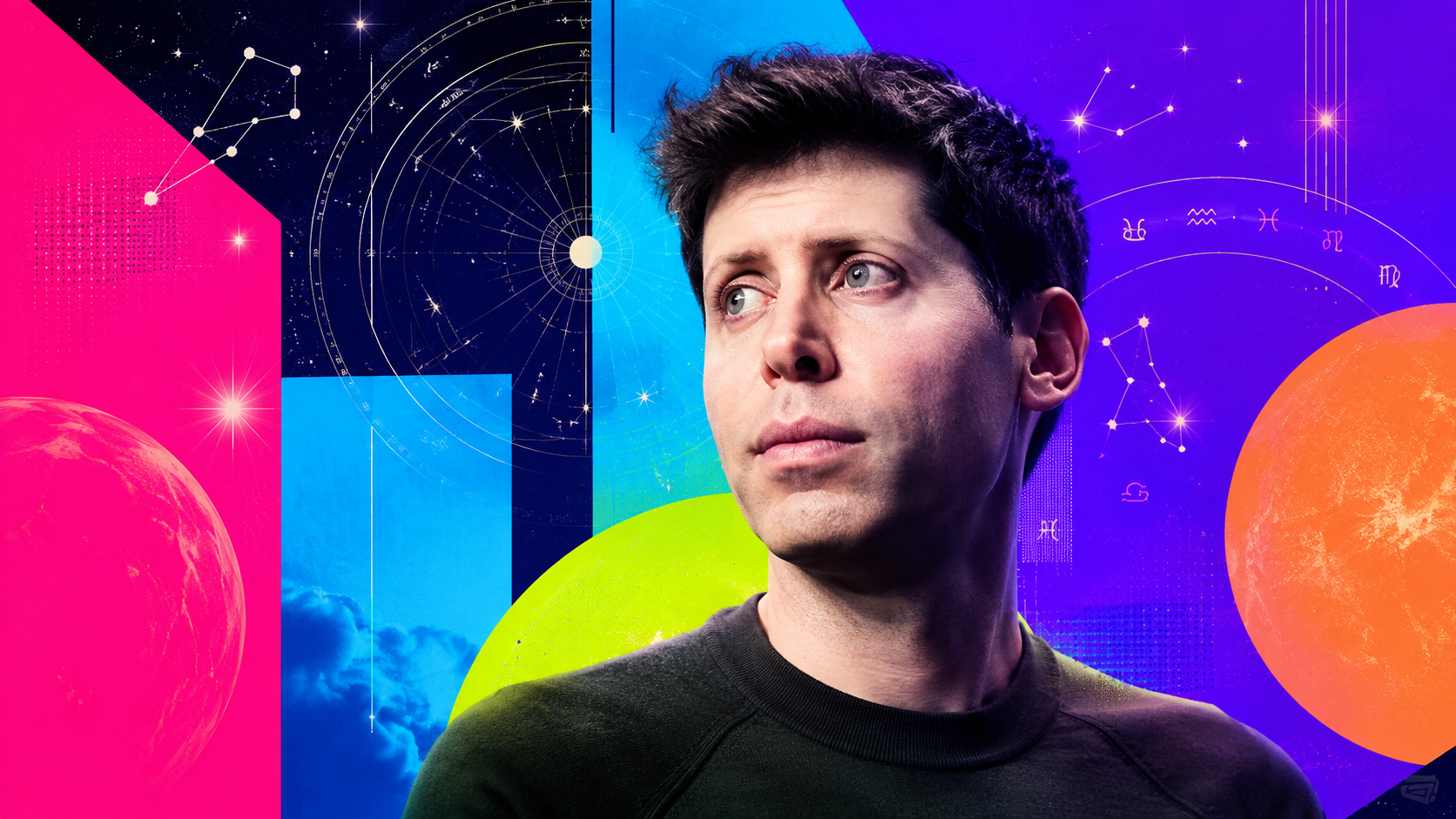
Sam Altman does not describe possibility.
He gives it a construction budget.
He talks about intelligence in terms of compute, energy, chips, data centers, capital, and the physical systems required to support it. In The Intelligence Age, he argued that the path forward would be built from “compute, energy, and human will.” In a later essay, he described a goal of creating a factory capable of producing a gigawatt of new AI infrastructure every week. OpenAI’s Stargate project was announced with the intention of investing $500 billion in American AI infrastructure over four years. form of futurism.
The vision may involve superintelligence, scientific breakthroughs, virtual experts, and forms of abundance that do not yet exist.
But the strategy is relentlessly material.
Where will the electricity come from?
How many chips will be needed?
How much compute can be secured?
Who will finance it?
How quickly can it be built?
The usual explanation is that Sam Altman is an optimist.
His chart says something more specific.
This is a Taurus Sun opposite Pluto and trine Neptune. Mercury and retrograde Venus are conjunct in Aries and square Neptune. Mars in Taurus opposes Saturn in Scorpio within approximately one degree. Jupiter in Aquarius forms a sextile to Uranus in Sagittarius. The entire traditional dispositor system eventually enters a mutual reception between Venus and Mars.
Translated into normal language, the pattern looks like this:
He can imagine a future that does not yet exist.
He can communicate that future with enough conviction that other people begin organizing around it.
He can tolerate years of resistance while assembling the resources necessary to build it.
He is drawn toward projects whose consequences extend far beyond the original company or product.
And once he believes a direction is historically important, changing that direction may become considerably harder than increasing the scale.
This is not merely a visionary chart.
It is a chart that tries to convert vision into physical reality.
It is The Futurist Who Turned Imagination Into Infrastructure.
A Note About the Birth Time
Sam Altman was born on April 22, 1985, in Chicago, Illinois.
This interpretation uses a 12:00 noon chart because the exact birth time has not been verified. The Ascendant, Midheaven, houses, chart angles, and aspects to those angles are therefore excluded.
Any house placements produced by the noon placeholder should not be interpreted as natal facts.
The Moon requires even greater caution.
At noon, the Moon sits at approximately 29°59′44″ Taurus—only sixteen arcseconds from entering Gemini.
This means the Moon sign is not secure.
A birth before the ingress would produce a Taurus Moon. A birth after it would produce a Gemini Moon. Because the change occurred extremely close to the noon placeholder, the emotional system cannot responsibly be interpreted without a reliable birth time.
The noon Moon also appears conjunct Mars and opposite Saturn, but these aspects are provisional and should not be treated as established components of the chart.
The stable planetary positions used in this reading are:
Sun at 2°33′ Taurus
Mercury at 7°59′ Aries
Venus at 6°06′ Aries, retrograde
Mars at 27°28′ Taurus
Jupiter at 14°09′ Aquarius
Saturn at 26°29′ Scorpio, retrograde
Uranus at 17°35′ Sagittarius, retrograde
Neptune at 3°32′ Capricorn, retrograde
Pluto at 3°23′ Scorpio, retrograde
North Node at 18°09′ Taurus
The stable chart is strongly fixed.
The Sun, Mars, Jupiter, Saturn, and Pluto occupy fixed signs. The North Node adds another fixed placement in Taurus.
The Moon’s uncertainty does not change the central conclusion:
This is a chart built to sustain, concentrate, resist, and continue.
The Chart in Plain English
Before examining each placement, here is the basic psychological architecture.
Taurus wants to make the vision tangible
The Sun, Mars, and North Node are in Taurus.
Taurus is concerned with value, resources, durability, ownership, stability, physical reality, and the gradual accumulation of something that can last.
It does not consider an idea complete simply because the idea is interesting.
It asks:
Can it be built?
Can it be funded?
Can it survive?
Can it scale without collapsing?
What resources does it require?
What will still be functioning ten years from now?
This is why Altman’s public futurism repeatedly returns to infrastructure. The future is not presented only as a new philosophy or software experience. It becomes a problem involving electricity, construction, manufacturing, supply chains, data centers, and enormous quantities of capital. efore consensus forms
Mercury and Venus are conjunct in Aries.
Mercury describes thinking, communication, strategy, language, and the way information is processed.
Venus describes value, attraction, persuasion, social appeal, aesthetics, alliances, and what a person considers worth pursuing.
In Aries, these functions become direct, entrepreneurial, independent, and willing to move before the group has reached agreement.
The mind does not wait for universal permission.
The value system does not automatically assume that consensus is correct.
The message gains energy from being early.
Fixed signs refuse to release the objective easily
The chart’s fixed dominance provides endurance.
Fixed signs preserve.
They maintain concentration after the initial excitement has disappeared.
They can withstand repetition, criticism, delay, and opposition when the objective continues to feel important.
But the same quality can become rigidity.
A fixed chart may become extremely skilled at overcoming resistance without always pausing to ask whether resistance contains useful information.
Persistence is one of its greatest advantages.
Persistence is also where its most consequential blind spots may develop.
Neptune supplies the future
Neptune represents imagination, ideals, projection, mythology, collective longing, sacrifice, ambiguity, and realities that are sensed before they can be measured.
Neptune trines the Taurus Sun and squares both Mercury and Venus.
The vision is therefore not separate from the identity or communication system.
It is central to both.
This is a person who may not merely promote a future because it is commercially useful. He may experience the future as psychologically real before other people do.
Pluto raises the question of control
Pluto in Scorpio opposes the Sun in Taurus.
Pluto concerns power, control, concentration, secrecy, survival, transformation, institutional force, and the irreversible consequences of entering high-stakes systems.
The opposition places identity and power in permanent conversation.
The person may seek enough influence to transform existing structures, only to discover that gaining transformative power also changes the person holding it.
The chart does not permit power to remain an abstract ethical question.
It becomes a lived environment.
Saturn supplies the resistance
Saturn in Scorpio opposes Mars in Taurus within approximately 0°59′.
Mars wants to act.
Saturn establishes limits.
Mars applies force.
Saturn asks whether the force has authorization, structure, accountability, and sufficient control over its consequences.
Because both planets occupy fixed signs, this is not a minor disagreement.
It is a prolonged contest between momentum and restraint.
Sun in Taurus: The Future Must Become Physical
The Sun represents identity, vitality, purpose, authority, and the central organizing principle of the personality.
Sam Altman’s Sun is in Taurus.
Taurus is sometimes reduced to comfort, routine, food, luxury, or resistance to change.
Those associations describe only the surface.
At its core, Taurus is concerned with the preservation and cultivation of value.
It takes something with potential and gives it continuity.
It understands that almost every meaningful outcome requires resources:
Time.
Money.
Energy.
Land.
Materials.
Talent.
Attention.
Trust.
A functioning system through which all of those resources can be coordinated.
This is a particularly important distinction in Altman’s chart because his public identity is associated with a rapidly changing technology.
Artificial intelligence appears fast.
Taurus builds slowly.
The contradiction disappears when the deeper function is understood.
Altman’s role has not only been to produce technical novelty. He has repeatedly worked on the institutional, financial, political, and physical structures that allow technical novelty to become widely deployed.
He co-founded Loopt as part of Y Combinator’s first startup batch, later served as YC’s president, and eventually became the co-founder and CEO of OpenAI. ed.
The scale changed.
The central function remained recognizable:
Identify something that may become valuable.
Gather resources around it.
Construct a system capable of carrying it further than an individual inventor could.
Taurus is not impressed by possibility alone.
Possibility has to acquire weight.
What does that actually mean?
It means the person may instinctively understand that revolutionary ideas still depend on ordinary material facts.
A model needs chips.
Chips need factories.
Factories need energy.
Energy requires infrastructure.
Infrastructure requires governments, investors, land, labor, suppliers, and long-term agreements.
The vision may sound futuristic.
The execution becomes profoundly Taurean.
Sun Trine Neptune: The Future Feels Real Before It Arrives
The Taurus Sun trines Neptune in Capricorn within approximately 0°59′.
This is one of the chart’s defining aspects.
Neptune gives the Sun imagination, idealism, symbolic influence, and sensitivity to collective dreams.
The trine means these functions cooperate relatively easily.
The person can identify with an enormous possibility without feeling that the possibility is separate from practical life.
Taurus provides form.
Capricorn provides structure.
Neptune supplies the imagined world that the structure is attempting to reach.
Altman’s public writing frequently moves from concrete technological trends into civilizational possibility. He has described a future of personalized education, accelerated scientific discovery, greater prosperity, abundant intelligence, and individuals equipped with intellectual resources that were once available only to major institutions. rs.
He does not usually present the optimistic future as a decorative fantasy.
He presents it as the likely destination of a curve that is already moving.
That is Sun-Neptune in an earth-sign relationship.
The dream is treated as a construction forecast.
The gift
Sun trine Neptune can make a person unusually effective at directing effort toward something that does not yet have complete physical evidence.
Every ambitious project requires this capacity.
If someone can act only after the outcome becomes certain, the person will arrive after the important decisions have already been made.
Neptune permits faith.
Earth gives the faith a project plan.
The shadow
The danger is not necessarily dishonesty.
The subtler danger is identification.
When the person’s identity becomes fused with a vision of the future, criticism of the plan may feel like failure to comprehend the future itself.
The person may sincerely believe that the destination is beneficial while underestimating how much uncertainty remains in the route.
A compelling future can also become a moral argument:
If the destination is this valuable, then delay begins to look irresponsible.
If the benefits are this large, resistance begins to look shortsighted.
If the technology is this inevitable, building it first begins to feel like stewardship rather than competition.
Sun-Neptune needs a continuing distinction between:
The vision.
The evidence.
The institution promoting the vision.
And the human being who has become identified with it.
Sun Opposite Pluto: The Builder Enters the Power System
The Sun opposes Pluto within approximately 0°50′.
This is the tightest major personal aspect in the stable chart.
Pluto intensifies whatever it touches.
It brings the Sun into contact with power, institutional conflict, secrecy, survival, control, loss, regeneration, and situations in which the stakes become too high for casual participation.
Sun-Pluto people may develop a complicated relationship with influence.
They can be fascinated by powerful systems.
They can also become exceptionally aware of how vulnerable a person is without sufficient control over those systems.
The opposition externalizes the tension.
Power may initially appear to exist somewhere else:
In the board.
In the investor.
In the institution.
In the regulator.
In the competitor.
In the government.
In the technology itself.
Over time, the person may acquire increasing authority while continuing to experience power as something that must be negotiated, defended, consolidated, or transformed.
Altman’s public career has repeatedly placed him inside institutions making decisions with consequences far beyond their original membership. OpenAI’s stated mission is to ensure that artificial general intelligence benefits humanity, while its leadership must simultaneously manage research, products, capital, infrastructure, security, governance, and relationships with governments. ission makes power unavoidable.
The 2023 governance crisis
In November 2023, OpenAI’s board removed Altman as CEO. He returned within days.
A later review described a breakdown in trust between Altman and the prior board. It also found that the board acted on an abridged timeline and that Altman’s conduct did not mandate removal. OpenAI subsequently announced governance changes and expressed confidence in his continued leadership. prove why that event happened.
It does not establish which participant was right.
It does not turn a corporate crisis into evidence of an astrological personality trait.
But as public symbolism, the event is almost literal:
The chief executive is removed by the governing authority.
The institution enters a survival crisis.
Alliances reorganize.
The executive returns with renewed authority.
The board itself is transformed.
That is Sun opposite Pluto language.
Identity enters conflict with institutional power, and neither side emerges in its previous form.
The deeper psychological question
The opposition asks:
How much control is necessary to complete the mission?
At what point does control begin changing the mission?
Can a person transform a powerful institution without becoming inseparable from its power?
Can opposition be evaluated on its merits, or does it automatically become another force to overcome?
Pluto does not offer an innocent relationship with influence.
It requires continuing self-examination precisely when self-examination becomes least convenient.
Mercury Conjunct Venus in Aries: Selling the First Move
Mercury and Venus are conjunct within approximately 1°53′.
This links thought with value and communication with persuasion.
Mercury-Venus people often know how to make an idea attractive.
They may communicate with clarity, social intelligence, charm, aesthetic simplicity, or an instinctive awareness of which part of a complicated argument people will remember.
In Aries, the style becomes more direct.
The message is not heavily ornamented.
It advances.
Altman’s essays tend to rely on plain language, short arguments, memorable numerical claims, and declarative statements about what matters. In his writing about success, he emphasizes compounding, independent thought, focus, boldness, sales, internal motivation, hard work, and the need to become willful enough to continue when other people do not understand the objective. nus in Aries.
The idea becomes persuasive partly because the speaker appears willing to act on it.
Venus retrograde: The value system is internally authored
Venus is retrograde.
A retrograde planet often turns its function inward before expressing it outwardly.
With Venus, values may be formed through personal reconsideration rather than simple adoption of the surrounding culture’s preferences.
The person may appear socially fluent while still following an internal standard that is not particularly democratic.
Approval can be useful.
Consensus can be useful.
Neither necessarily determines value.
In Aries, retrograde Venus may repeatedly ask:
What do I actually want?
What do I consider valuable before the market agrees?
Which opportunity would I pursue even if the existing establishment dismissed it?
This can support contrarian investment, early-stage entrepreneurship, and a willingness to assign value to ideas that have not yet become respectable.
It can also make the person difficult to influence through ordinary social pressure.
Mercury and Venus Square Neptune: The Vision Becomes the Message
Mercury squares Neptune within approximately 4°27′.
Venus squares Neptune within approximately 2°34′.
These aspects complicate the clean directness of Aries.
Mercury wants to name the idea.
Venus wants other people to value it.
Neptune enlarges the imaginative field surrounding both.
This can produce extraordinary visionary communication.
The person may understand that people do not organize around technical specifications alone.
They organize around meaning.
A model is not only a model.
It becomes a personal tutor.
A scientific collaborator.
A medical assistant.
A new economic era.
A mechanism for distributing intellectual capacity.
A route toward prosperity.
A technology becomes culturally powerful when people can imagine the life surrounding it.
Mercury-Venus-Neptune knows how to create that surrounding image.
The projection problem
Neptune does not only generate vision.
It also generates projection.
Different audiences can hear the same statement and construct entirely different meanings around it.
Supporters may hear human progress.
Investors may hear exponential returns.
Governments may hear strategic advantage.
Workers may hear displacement.
Researchers may hear scientific acceleration.
Critics may hear concentrated private power.
The message becomes larger than the speaker’s intended definition.
Altman’s writing acknowledges risks, disruption, uneven outcomes, and the need for governance. But the emotional center of the narrative remains strongly optimistic: progress will continue, intelligence will become less expensive, and sufficient infrastructure will permit extraordinary benefits. square matters.
The chart can communicate a genuine ideal and still underestimate how easily the ideal becomes confused with a forecast, a promise, or a justification.
What does that actually mean?
It means precision matters most when the vision is most persuasive.
What is currently possible?
What is probable?
What is aspirational?
What is a commercial objective?
What remains unknown?
Neptune does not always create falsehood.
Often it creates a story so compelling that the boundaries between these categories become difficult for the audience to maintain.
The mature expression does not abandon the vision.
It labels the uncertainty with equal force.
The Venus–Mars Mutual Reception: The Chart’s Operating System
The traditional dispositor system leads almost the entire chart into a closed relationship between Venus and Mars.
Venus is in Aries, a sign ruled by Mars.
Mars is in Taurus, a sign ruled by Venus.
The two planets therefore occupy one another’s signs.
This is called mutual reception.
It means attraction and action cannot be separated easily.
What the person values affects what he pursues.
What he pursues changes what becomes valuable.
The product supports the mission.
The mission increases the product’s value.
The investment funds the infrastructure.
The infrastructure makes greater scale possible.
Greater scale attracts more investment.
The system begins feeding itself.
Venus in Aries initiates value
Venus in Aries recognizes the appeal of the new.
It can make novelty desirable before novelty is safe, familiar, or widely understood.
It asks:
What will people want next?
What could become valuable if someone moved first?
What possibility is being overlooked because it does not yet fit the existing category?
Mars in Taurus sustains the pursuit
Mars in Taurus is traditionally considered in detriment because Mars prefers speed and Taurus slows it down.
But slow Mars is not inactive Mars.
It changes the form of force.
Mars in Taurus does not necessarily win through sudden acceleration.
It wins through torque.
It applies pressure.
It accumulates resources.
It continues after more excitable competitors have lost interest.
It does not need every week to feel dramatic.
It needs the direction to remain valuable.
The loop
Aries starts.
Taurus sustains.
Venus attracts support.
Mars converts support into action.
Action produces assets.
Assets increase influence.
Influence makes a larger action possible.
This is the psychological form of compounding.
Altman has explicitly described compounding as central to exceptional careers and businesses, arguing for projects with network effects, scale, leverage, and the potential to make earlier work look small by comparison. d serve as a description of the chart’s dispositor system.
Mars Opposite Saturn: The Accelerator Meets the Gatekeeper
Mars in Taurus opposes retrograde Saturn in Scorpio within approximately 0°59′.
This is one of the most important aspects in the chart.
Mars represents action, ambition, anger, force, competition, courage, and the pursuit of an objective.
Saturn represents authority, rules, accountability, delay, fear, restriction, discipline, governance, and the consequences that arrive when enthusiasm meets reality.
The opposition places them across the Taurus-Scorpio axis.
Taurus asks who possesses the resources.
Scorpio asks who controls access.
Taurus builds the asset.
Scorpio investigates the power attached to it.
Taurus wants continuity.
Scorpio knows that some developments permanently alter the balance of power.
This is not simply a hard-working aspect.
It is a chart of sustained pressure between execution and restraint.
Mars in Taurus says:
Keep building.
Secure more resources.
Do not abandon the objective because the timeline is difficult.
Make the system strong enough that it cannot be easily displaced.
Saturn in Scorpio says:
Who has authority over the system?
What happens if trust breaks down?
What information is being withheld?
What safeguards exist if the power is misused?
Who can stop the process?
What happens when the builder and the governor no longer agree?
These are not theoretical questions in Altman’s professional world.
Artificial intelligence development now involves corporate boards, national governments, regulators, safety researchers, commercial partners, infrastructure providers, and public debate over who should control increasingly capable systems.
Altman has testified before the United States Senate about both AI’s potential and the need for regulatory oversight. the same argument internally.
Build.
But govern.
Move.
But contain.
Scale.
But prove that the structure can survive its own power.
The gift: enormous frustration tolerance
Mars-Saturn aspects can produce exceptional endurance.
The person becomes accustomed to resistance.
Obstacles do not automatically indicate that the objective should be abandoned.
Delay can increase determination.
Criticism can produce more preparation.
A closed door becomes a problem to solve.
A failed structure becomes a reason to build another one.
This quality is particularly potent in fixed signs because neither planet changes direction easily.
The shadow: every boundary can look like friction
The danger appears when the person becomes too skilled at overcoming resistance.
Some resistance is fear.
Some resistance is bureaucracy.
Some resistance is competition.
Some resistance is useful feedback.
Mars opposite Saturn must learn to distinguish between them.
Otherwise, oversight may be experienced primarily as obstruction.
Caution may be interpreted as failure of imagination.
A person can become so practiced at moving around barriers that the existence of the barrier itself no longer generates reflection.
The mature expression does not stop building.
It develops enough respect for Saturn to understand that legitimacy, accountability, and trust are forms of infrastructure too.
Jupiter in Aquarius Sextile Uranus: Scaling the Unconventional
Jupiter sits in Aquarius and sextiles Uranus in Sagittarius within approximately 3°26′.
Jupiter expands.
It concerns opportunity, belief, growth, scale, education, philosophy, publishing, law, and the worldview through which a person interprets possibility.
Aquarius is associated with systems, technology, networks, social structures, collective futures, experimentation, and ideas that initially exist outside the mainstream.
Uranus brings disruption, invention, independence, sudden change, unconventional thinking, and the refusal to repeat an inherited model simply because it already exists.
The sextile creates cooperation between expansion and disruption.
The person may possess a strong instinct for technologies or organizations that can alter the rules of an entire category.
This is not merely an interest in inventing a useful object.
It is interest in changing the system through which useful objects are created, distributed, financed, or understood.
Altman’s career moved from founding a startup to leading Y Combinator, an organization designed to identify and accelerate other founders. He then became a central leader of OpenAI, whose stated mission concerns the consequences of artificial general intelligence for humanity as a whole. ly moves outward:
One product.
Then a network of founders.
Then a general-purpose technology.
Then the infrastructure required to make that technology widely available.
Jupiter in Aquarius thinks in systems.
Uranus in Sagittarius thinks in historical leaps.
Together, they are less interested in improving the existing decade than in defining what the next era will be called.
Jupiter Square the North Node: Can Collective Promise Become Shared Value?
Jupiter squares the North Node within approximately four degrees.
The North Node in Taurus describes a developmental direction involving sustainable value, simplicity, stability, material stewardship, patience, and a grounded relationship with resources.
Jupiter in Aquarius expands collective ideas.
It imagines technologies that affect everyone.
It thinks about humanity, networks, access, abundance, and the social consequences of innovation.
The square creates a necessary tension.
A vision can be universal in language while remaining unequal in material distribution.
A technology can promise abundance while requiring scarce resources.
A system can be described as benefiting humanity while being developed through institutions that most of humanity cannot govern.
The aspect does not say the collective vision is false.
It says the vision must become tangible enough to be evaluated.
Who receives the benefit?
Who owns the infrastructure?
Who carries the environmental cost?
Who has access?
Who can opt out?
Who can challenge the institution’s decisions?
How is value distributed once intelligence itself becomes an economic asset?
Altman co-founded World with the stated ambition of creating a global identity and financial network, distinguishing humans from AI online and potentially supporting a path toward AI-funded universal basic income. uarius language attempting to reach a Taurus outcome:
A global technological idea must eventually produce concrete value for individual human beings.
The North Node’s lesson is not to make the ambition smaller.
It is to make the benefit real.
Fixed Dominance: Willfulness as Both Advantage and Risk
The stable chart is overwhelmingly fixed.
Fixed signs possess concentration.
They are capable of continuing long after the emotional reward of beginning has disappeared.
This is one of the strongest signatures for long-range commitment.
Altman’s own writing emphasizes focus, persistence, internal motivation, self-belief, compounding, and the capacity to remain committed when other people do not yet agree. He has written that people can “bend the world” through sufficient will and persistence. ts the chart.
Cardinal energy begins.
Mutable energy experiments and adapts.
Fixed energy makes the result difficult to remove.
Mercury and Venus in Aries can recognize and announce the opening.
Uranus in Sagittarius can envision the unexplored territory.
But the fixed planets determine whether the project becomes an institution.
The competitive advantage
The chart can hold an objective through:
Skepticism
Capital constraints
Technical difficulty
Public criticism
Institutional conflict
Slow construction
Regulatory uncertainty
Repeated demands for proof
Once the internal decision has been made, outside doubt may have limited power to change it.
The risk
Fixed energy can confuse consistency with correctness.
The longer the person has defended an objective, the more identity, reputation, capital, and authority become attached to its continuation.
Changing direction then carries more than practical cost.
It can feel like surrendering the entire story that gave the effort meaning.
This chart needs trusted people and governance structures capable of distinguishing:
A temporary obstacle from a structural warning.
A critic from an enemy.
A delay from a defeat.
And persistence from escalation.
The Uncertain Moon: What the Noon Chart Cannot Tell Us
Because the Moon changes signs at approximately the noon placeholder, this chart cannot establish whether Altman has a Taurus Moon or Gemini Moon.
That distinction matters.
A Taurus Moon seeks emotional steadiness, predictability, physical continuity, and enough time to settle before responding.
A Gemini Moon processes emotion through language, information, comparison, movement, and changing mental perspectives.
These are different regulation systems.
A Taurus Moon would reinforce the chart’s fixed-earth concentration considerably.
A Gemini Moon would introduce more flexibility, mental movement, and air into a chart otherwise dominated by fixed signs.
The Moon’s aspects to Mars, Saturn, Neptune, and Pluto also change with the unknown birth time.
It would therefore be irresponsible to use the noon Moon to make claims about:
His attachment style
Emotional needs
Private relationships
Family dynamics
Instinctive reactions
Personal vulnerability
The precise relationship between emotion and ambition
The stable chart can describe the machinery of purpose, thought, persuasion, ambition, scale, and power.
The private emotional operator remains unavailable.
That limitation should be preserved rather than filled with speculation.
The Chart’s Central Configuration: Vision, Power, and Resistance
Three stable patterns dominate the portrait.
The Sun–Neptune–Pluto system
The Sun opposes Pluto and trines Neptune.
Pluto also forms a close generational sextile to Neptune.
Identity is placed between vision and power.
The person can imagine transformative possibilities.
He can also become personally entangled with the institutions powerful enough to pursue them.
Neptune offers a route through the Sun-Pluto conflict:
Return to the mission.
Return to the future.
Return to the larger story about what the power is for.
This can be inspiring.
It can also make the mission psychologically capable of justifying an extraordinary concentration of resources and authority.
The Venus–Mars system
Venus and Mars occupy one another’s signs.
Value becomes action.
Action creates value.
Attraction secures support.
Support funds further execution.
The chart is built for compounding loops.
The Mars–Saturn opposition
Every attempt to accelerate the system eventually meets a question of control.
The chart cannot escape governance by simply becoming more effective.
Greater effectiveness makes governance more necessary.
This may be the most important developmental fact in the entire portrait.
The chart’s work is not only to build something powerful.
It is to create structures capable of remaining trustworthy after the builder becomes powerful too.
The Future as a Construction Project
Sam Altman’s chart contains an unusual combination.
Neptune imagines.
Aries initiates.
Aquarius universalizes.
Taurus materializes.
Scorpio controls.
Saturn tests.
Pluto transforms.
The result is a person who may look toward an almost unimaginable future while speaking constantly about the resources needed to make it ordinary.
That is the central paradox.
The imagined outcome may sound like science fiction.
The method is accumulation.
More compute.
More energy.
More talent.
More capital.
More infrastructure.
More institutional influence.
More capacity to withstand the objections that arrive at each new level of scale.
The chart’s strength is its refusal to leave the future inside the imagination.
Its danger is the possibility of treating construction as inevitability.
Something can be technically possible without being socially agreed upon.
It can be economically valuable without being evenly beneficial.
It can be historically important without every decision made in its name being correct.
It can be built successfully and still require limits.
The mature Taurus path is not endless acquisition.
It is stewardship.
The mature Pluto path is not maximum control.
It is conscious responsibility for the consequences of power.
The mature Neptune path is not abandoning the dream.
It is refusing to let the dream erase uncertainty.
And the mature Mars-Saturn path is not choosing speed or caution once and for all.
It is building a structure in which action and accountability become capable of moving together.
The Final Portrait
Sam Altman is not simply a Taurus who likes stability.
He is a Taurus building stability for technologies designed to destabilize the world around them.
He is not simply an Aries communicator.
He is a communicator who makes the first move sound like the beginning of an unavoidable historical direction.
He is not simply an Aquarius futurist.
He is a futurist attempting to create systems that operate at the scale of humanity.
He is not simply a Sun-Pluto personality attracted to power.
He is a person whose public mission increasingly requires decisions about who will possess, govern, distribute, and limit one of the most consequential technologies being developed.
The chart does not tell us whether every prediction will be correct.
It does not prove that the future he describes will arrive.
It does not establish that scale itself is beneficial.
What it does describe is the psychological architecture of someone capable of committing extraordinary resources to a possibility before the rest of society has decided what that possibility means.
He does not merely wait for the future.
He tries to finance it.
He tries to power it.
He tries to construct the facilities in which it can be trained.
He tries to create the organizations through which it can spread.
And when the scale produces resistance, he appears more inclined to build through the resistance than to abandon the direction.
That is not ordinary optimism.
It is imagination converted into infrastructure.
It is The Futurist Who Turned Imagination Into Infrastructure.
Your Chart Is Waiting
This interpretation was created without a verified birth time.
No Rising sign.
No Midheaven.
No houses.
No invented certainty about the Moon.
And still, the architecture emerged:
The Taurus builder.
The Aries initiator.
The Venus–Mars engine.
The Neptunian future.
The Plutonian relationship with power.
The Saturnian confrontation with governance.
Imagine what your own complete chart could reveal with an exact birth time: the life areas carrying your strongest ambitions, the emotional patterns shaping your decisions, the relationships through which your lessons arrive, and the precise places where your potential is waiting to become real.
Book your personal chart reading—and discover what was written in your stars.
Frequently Asked Questions
What is Sam Altman’s zodiac sign?
Sam Altman is a Taurus Sun.
He was born on April 22, 1985, with the Sun at approximately 2°33′ Taurus in the noon chart used for this interpretation.
Taurus is associated with value, resources, durability, patience, ownership, material construction, and the ability to cultivate something over time.
In Altman’s chart, Taurus is especially important because the Sun, Mars, and North Node all occupy the sign.
What is Sam Altman’s Moon sign?
Sam Altman’s Moon sign cannot be confirmed without an exact birth time.
At the 12:00 noon placeholder, the Moon is at approximately 29°59′44″ Taurus, only sixteen arcseconds from entering Gemini.
A birth before the ingress would give him a Taurus Moon. A birth after it would give him a Gemini Moon.
Because the sign changes extremely close to the placeholder time, neither Moon sign should be presented as certain.
Why are the houses not interpreted in Sam Altman’s chart?
The houses depend on an exact birth time.
Because this reading uses a noon placeholder, the Ascendant, Midheaven, house cusps, planetary house placements, and aspects to the chart angles are unreliable.
The generated house positions have therefore been excluded.
The planetary signs and stable interplanetary aspects can still be interpreted, but the chart cannot responsibly show where those patterns operate most strongly in his private life.
What is the strongest aspect in Sam Altman’s birth chart?
The tightest major personal aspect in the stable chart is the Sun opposite Pluto at approximately 0°50′.
Mars opposite Saturn and Sun trine Neptune are also within approximately one degree.
Sun opposite Pluto intensifies themes involving identity, power, control, transformation, institutional conflict, and the consequences of gaining significant influence.
Mars opposite Saturn describes sustained tension between action and restriction, while Sun trine Neptune supports imagination, idealism, and identification with a larger vision.
What does Mars opposite Saturn mean?
Mars represents action, ambition, force, and the pursuit of an objective.
Saturn represents limits, authority, accountability, discipline, delay, and governance.
An opposition creates tension between the two.
The person may possess considerable endurance because obstacles increase determination. However, they may also experience rules, criticism, or oversight primarily as resistance that must be overcome.
In fixed signs, the aspect becomes particularly persistent. Mars in Taurus continues applying pressure, while Saturn in Scorpio demands control, trust, and accountability.
What does Mercury conjunct Venus in Aries mean?
Mercury conjunct Venus links communication with persuasion.
The person may know how to express ideas in a clear, appealing, or memorable way.
In Aries, the communication becomes direct, independent, entrepreneurial, and willing to advance before consensus forms.
The person may be especially effective at generating enthusiasm for ideas that are new, controversial, or not yet widely accepted.
Because Venus is retrograde, the underlying value system may be more internally determined than the socially fluent presentation initially suggests.
What does Mercury square Neptune mean?
Mercury square Neptune combines language with imagination.
It can support visionary thinking, symbolic communication, storytelling, and the ability to help other people imagine possibilities that do not yet exist.
The challenge is maintaining clear boundaries between what is proven, what is predicted, what is hoped for, and what is being promoted.
The vision may be genuine while still attracting projections or interpretations that extend beyond the available evidence.
What is a Venus–Mars mutual reception?
A mutual reception occurs when two planets occupy signs ruled by one another.
Sam Altman has Venus in Aries, which is ruled by Mars, and Mars in Taurus, which is ruled by Venus.
The two planets therefore form a closed circuit.
Venus describes value, attraction, alliances, and what a person wants.
Mars describes action, pursuit, ambition, and how a person goes after it.
The mutual reception connects value with execution. What the person wants produces action, and successful action creates additional value and support.
Why is Sam Altman’s chart so fixed?
The Sun, Mars, Jupiter, Saturn, and Pluto all occupy fixed signs. The North Node is also in fixed Taurus.
Fixed signs are associated with persistence, concentration, stability, loyalty, resistance, and the ability to continue after the initial excitement has faded.
This can support exceptional long-term execution.
The challenge is knowing when persistence remains productive and when commitment has become rigidity.
What does the North Node in Taurus mean?
The North Node in Taurus describes a developmental direction toward sustainable value, stability, simplicity, patience, material responsibility, and careful stewardship of resources.
The chart’s Jupiter in Aquarius squares the North Node, creating tension between enormous collective visions and the practical distribution of their benefits.
The lesson is not merely to imagine abundance at a global scale.
It is to make the value tangible, sustainable, and genuinely accessible to the people the vision claims to serve.