Written in the Stars: Ian Stevenson, The Psychiatrist Who Turned Past Lives Into Case Files
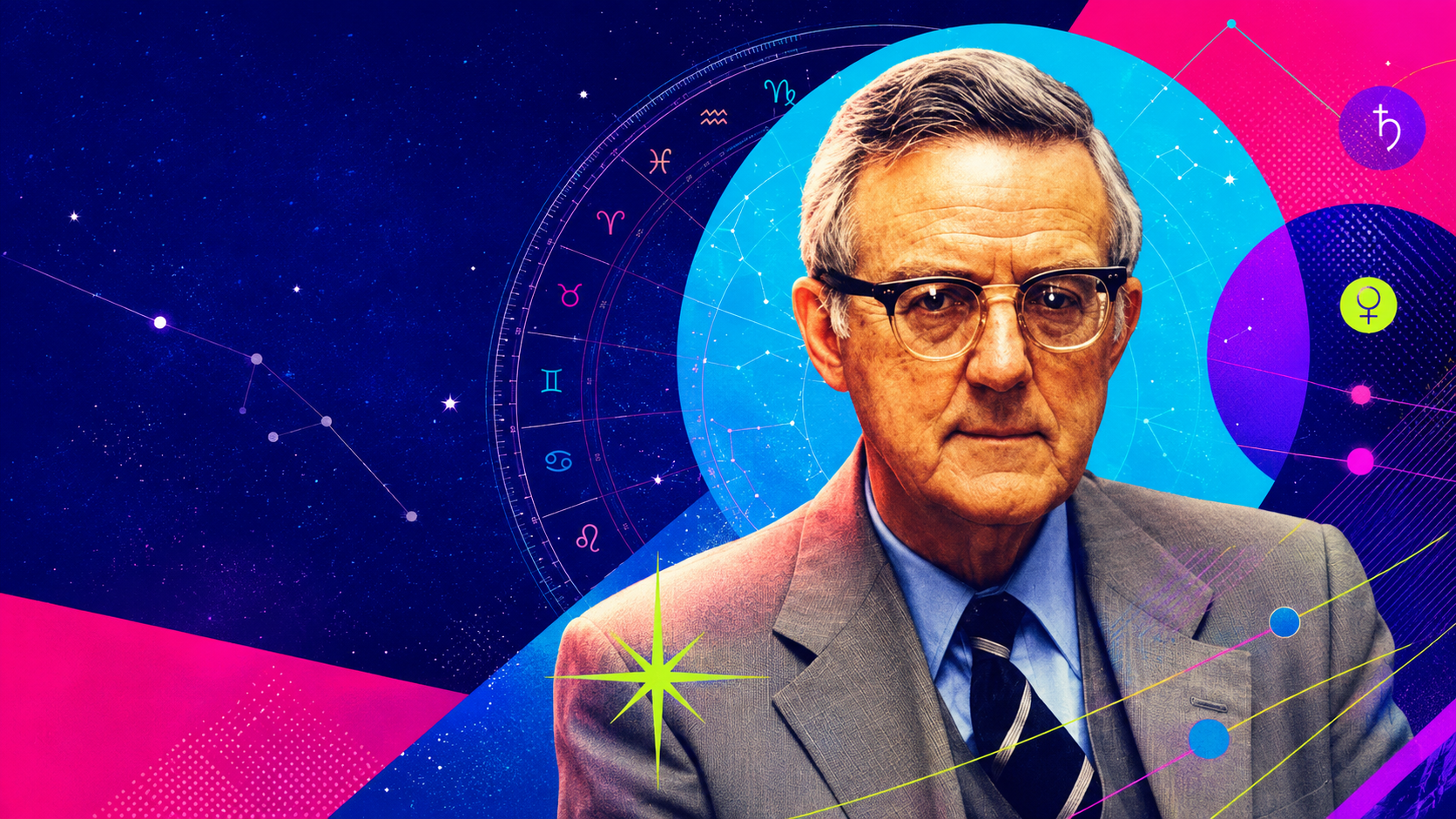
Ian Stevenson spent more than forty years investigating a question that most psychiatrists would never make the center of a medical career:
Can something about human personality survive bodily death?
Not:
Do people believe in reincarnation?
That is an anthropological question.
Not:
Can adults under hypnosis tell dramatic stories about past lives?
Stevenson was notably skeptical of hypnotic past-life regression and instead focused on spontaneous statements made by young children. UVA's Division of Perceptual Studies still describes that basic methodology as central to the research tradition he established.
The children might begin speaking at two or three years old.
They might describe another family.
Another town.
Another occupation.
Another name.
Sometimes a violent death.
Researchers would then ask whether the statements corresponded to an identifiable deceased person and whether ordinary routes of information could plausibly explain what the child knew.
Stevenson eventually traveled around the world investigating cases of this kind. His UVA obituary says he studied nearly 3,000 cases over the following decades, while the university's publication summaries describe an archive of thousands of reports.
And then he pushed the question further.
Some children had unusual birthmarks or congenital defects.
Could those physical features correspond to injuries suffered by the deceased person the child claimed to remember?
Stevenson spent decades collecting that material too, eventually publishing a two-volume work exceeding 2,000 pages devoted to reported correlations between claimed previous lives and birthmarks or birth defects.
It is an extraordinary biography.
Not because reincarnation was proven.
It wasn't.
His interpretation remains controversial, and critics have raised serious methodological questions involving possible information contamination between families, leading questions, memory distortion, cultural expectations, and the difficulty of eliminating ordinary explanations in retrospective case studies.
That distinction matters.
Because the interesting thing about Stevenson was not simply that he entertained an extraordinary possibility.
Many people do that.
He attempted to turn the extraordinary possibility into something documentable.
A claim.
A witness.
A statement.
A date.
A photograph.
A medical report.
A discrepancy.
An alternative explanation.
A case.
Then another case.
Then another.
The mystery did not disappear.
It acquired a filing system.
And that is the chart.
Ian Stevenson did not turn reincarnation into certainty.
He turned past lives into case files.
Born on Halloween: An Almost Impossible Coincidence to Ignore
Before we get into the astrology, there is one biographical detail that almost demands acknowledgment.
Ian Stevenson was born on October 31, 1918.
Halloween.
His University of Virginia obituary confirms the date.
And yes:
That is an extraordinary birthday for a man who would spend much of his adult life studying children who seemed to remember people who had died.
Halloween carries centuries of cultural associations with ghosts, spirits, death, remembrance, and imagined contact between the living and the dead. Modern Halloween developed through a complicated combination of traditions, including older Samhain beliefs concerning spirits and the dead.
Does being born on Halloween explain Ian Stevenson's career?
Of course not.
It proves nothing.
It is not an astrological aspect.
And it should not be turned into evidence for reincarnation.
But as symbolism?
It is almost too perfect.
A man born on a date culturally obsessed with the boundary between the living and the dead eventually devotes decades to asking whether that boundary is as absolute as we assume.
And he is born with a Scorpio Sun.
The zodiac sign most culturally associated with death, survival, transformation, hidden realities, and what exists beneath the visible surface.
Again:
Coincidence is not causation.
But sometimes a biography develops such precise symbolic poetry that pretending not to notice it would be less interesting than simply naming it.
Ian Stevenson was born on Halloween.
And he spent his life investigating the dead who, according to some children, had not entirely disappeared.
Sun in Scorpio: Do Not Stop at the Surface Explanation
Stevenson's Sun sits at 7°27′ Scorpio.
Scorpio is commonly reduced to:
Intensity.
Mystery.
Sex.
Secrets.
Those descriptions are not entirely wrong.
They are simply too shallow.
Scorpio's more interesting function is investigation through consequence.
Something happened.
What caused it?
Something disappeared.
What remains?
Someone died.
What changed?
What did not?
Something is hidden.
Why?
Scorpio is interested in whatever cannot be understood by looking only at the visible surface.
That makes it unusually appropriate symbolism for Stevenson.
His research did not begin with a child saying something strange and end with:
How spooky.
The question was:
What exactly did the child say?
When did the child first say it?
Who heard the statement?
Had the families already met?
Could the child have learned the information normally?
Is there a deceased person whose biography matches the statements?
Which details match?
Which do not?
What alternative explanations remain?
Scorpio does not merely enjoy mystery.
At its best, it interrogates mystery.
Sun Trine Pluto: Follow the Evidence Toward Death
The Sun trines Pluto within approximately 0°55′.
This is the tightest major planetary aspect in the stable chart.
And it may be the clearest signature of the entire horoscope.
Pluto intensifies Scorpio's central questions:
Death.
Survival.
Transformation.
Hidden causation.
Irreversible events.
What remains after something has been destroyed.
Where power exists beneath the apparent story.
For Stevenson, death becomes not merely a philosophical event but a research variable.
A child reports another identity.
That identity belonged to a dead person.
How did that person die?
Was the death sudden?
Violent?
Could the child's phobias, behaviors, statements, or physical characteristics correspond to the reported death?
Stevenson's UVA obituary notes that he identified recurring patterns across cultures, including reports that often involved sudden or violent deaths, unusual fears, behavioral traits, and physical marks.
The important distinction is that Pluto does not merely symbolize death.
It symbolizes what happens when death does not end the investigation.
The obvious event is:
The person died.
Stevenson's question was:
Then why does this child's story appear to continue it?
That is Sun-Pluto.
Follow the evidence into the place where everyone assumes the story has already ended.
Scorpio Does Not Mean “He Believed in Reincarnation”
This distinction matters.
A weak astrology reading would say:
Ian Stevenson was a Scorpio.
Scorpio rules death.
Therefore he studied reincarnation.
That is not enough.
Millions of Scorpio Suns do not become reincarnation researchers.
The chart becomes compelling because several independent systems repeat the same intellectual structure.
Scorpio provides the appetite for hidden causation.
Pluto intensifies it.
Neptune introduces the unprovable or nonmaterial possibility.
Mercury in Scorpio demands details.
Jupiter in Cancer enlarges questions about children and memory.
Mars in Sagittarius travels internationally to investigate them.
Saturn opposite Uranus places established scientific structure across from anomalous evidence.
The fixed-sign dominance keeps returning to the question for decades.
And the absence of earth makes the deliberate construction of material evidence especially important.
This is architecture.
Not keyword astrology.
Sun Square Neptune: The Scientist Meets the Invisible
If Sun trine Pluto describes the investigator, Sun square Neptune describes the problem he chose to investigate.
Orb:
Approximately 1°49′.
Neptune governs realms in which categories become unstable.
Reality and imagination.
Self and other.
Memory and fantasy.
Visible and invisible.
Material and nonmaterial.
Fact and projection.
A Neptune problem is difficult precisely because the thing being investigated may not submit cleanly to measurement.
And reincarnation is an extreme Neptune problem.
What would count as evidence?
A child's statement?
A matching name?
A matching death?
A birthmark?
A behavior?
How many coincidences become meaningful?
How do you eliminate information leakage?
How do you distinguish spontaneous memory from suggestion?
How much cultural belief influences the report?
If an observation is anomalous, does that automatically mean reincarnation explains it?
No.
And Stevenson generally resisted phrasing his work that way.
One of his best-known books is titled Twenty Cases Suggestive of Reincarnation.
Not:
Twenty Cases Proving Reincarnation.
That word—
suggestive—
is important.
Because Neptune tempts certainty precisely where certainty is hardest to obtain.
A mature Sun-Neptune square has to learn how to remain fascinated without pretending ambiguity has disappeared.
A Neptune Problem Handled With a Pluto Method
This may be the simplest way to describe Stevenson's career astrologically.
Neptune supplied the problem.
Something invisible.
Something ambiguous.
Something that might involve consciousness existing independently of the brain.
Something vulnerable to imagination, wishful thinking, fraud, confusion, and projection.
Pluto supplied the method.
Dig deeper.
Investigate.
Look for what is hidden.
Ask what happened around the death.
Find the witnesses.
Compare the stories.
Do not leave the uncomfortable detail untouched.
That combination is far more interesting than calling him mystical.
He was studying material most scientists regarded as profoundly questionable.
But instead of answering skepticism with faith, he tried to answer it with more documentation.
The Scientific Problem: An Anomaly Is Not an Explanation
This is one place where Stevenson's work deserves careful framing.
His cases are not accepted scientific proof of reincarnation.
Critics have argued that many investigations occurred after families had already communicated, leaving open normal routes of information transmission. Other criticisms concern interviewing practices, memory embellishment, cultural expectations, and the difficulty of reconstructing exactly what was said before investigators arrived.
Those objections matter.
An unusual observation does not automatically validate the most extraordinary explanation.
Suppose a child states several accurate facts about a deceased stranger.
Even if those statements cannot immediately be explained, there is still a second question:
Why?
Reincarnation is one hypothesis.
But unexplained is not synonymous with reincarnated.
Stevenson's work remains interesting precisely because the distinction does not disappear.
He collected cases he believed deserved consideration.
Others believe the methods leave too many ordinary explanations unresolved.
The scientific disagreement is not solved astrologically.
Nor should it be.
But Sun square Neptune understands the uncomfortable intellectual position beautifully:
The evidence may be intriguing.
The explanation remains uncertain.
And the mystery survives both belief and skepticism.
Mercury in Scorpio: The Detail Has to Survive Cross-Examination
Stevenson's Mercury sits at 17°32′ Scorpio.
This may be one of the best placements for understanding his actual research temperament.
Mercury gathers.
Classifies.
Interviews.
Compares.
Documents.
Scorpio asks:
What is missing?
What was withheld?
Where could contamination have occurred?
What happened before the official story began?
Who knew what?
When?
Mercury in Scorpio is not satisfied merely because a story is emotionally powerful.
It wants the part of the story that survives pressure.
That distinction separated Stevenson's approach from popular past-life entertainment.
He was skeptical of hypnotic regression, and UVA states that the research tradition he established relied instead on spontaneous statements from young children.
Why?
Because once an adult is placed under hypnosis and asked to imagine another life, the evidentiary problem becomes enormous.
Suggestion enters.
Fantasy enters.
Expectation enters.
The researcher has created the context in which the narrative appears.
Stevenson preferred cases in which the unusual statements appeared before the investigator.
That is Mercury in Scorpio at its best.
Do not merely collect the extraordinary story.
Investigate the chain through which the story arrived.
Mercury Trine Jupiter: One Child Becomes a Question About Human Nature
Mercury trines Jupiter within approximately 1°43′.
This is one of the strongest aspects in the chart.
Mercury investigates the case.
Jupiter asks what the case means.
Mercury gathers the statement.
Jupiter compares cultures.
Mercury asks:
Did this detail match?
Jupiter asks:
If enough details match, what does this imply about memory, personality, consciousness, and death?
That is an enormous intellectual leap.
And Jupiter is in Cancer.
That matters.
Cancer concerns:
Children.
Family.
Memory.
Origins.
Continuity.
What passes from one generation to another.
Belonging.
The emotional bonds that make one identity part of a larger lineage.
Stevenson's great philosophical question arrived through children.
Not professional mediums.
Not occult societies.
Not primarily adults seeking spiritual experiences.
Children.
UVA's current research description says these reports commonly begin when children are between roughly two and five years old and often fade later in childhood. The division now maintains thousands of such cases in its database.
Mercury gives us the child's statement.
Cancer gives us the child and family.
Jupiter asks:
What if this tiny statement has enormous implications?
Jupiter in Cancer: The Child Becomes the Philosophical Problem
Jupiter is at 15°48′ Cancer.
Traditionally exalted.
And according to the supplied chart, stationary retrograde.
That makes Jupiter unusually prominent.
Jupiter is concerned with the worldview.
What is true?
What does the evidence mean?
What model is large enough to contain what has been observed?
Cancer places that philosophical expansion inside the territory of memory, childhood, and family continuity.
That is unusually precise for Stevenson's career.
A child says:
I had another mother.
I lived in another town.
I died in a particular way.
I had another name.
To most adults, the first impulse may be to interpret the statement as fantasy.
Stevenson's impulse was:
What if we check?
That is an extraordinary Jupiter move.
Take the small thing seriously enough to discover whether it contains a much larger problem.
The Child Is Not the Proof
This distinction is important too.
A child's certainty is not evidence by itself.
Children imagine.
Misremember.
Absorb information.
Respond to adults.
Repeat stories.
Misunderstand events.
Families can unintentionally reinforce narratives.
Culture can shape interpretation.
Stevenson's methodology attempted to reduce some of these problems by documenting statements, interviewing witnesses, identifying possible former personalities, and comparing claimed memories with available records. His general-audience work also discussed methodology, cultural variation, criticism, and alternative interpretations.
Whether those methods were sufficient remains contested.
But astrologically, Jupiter in Cancer does not say:
Believe the child.
It says something more intellectually useful:
The child may be carrying a question larger than anyone initially assumes.
Then Mercury in Scorpio says:
Check it.
Saturn Opposite Uranus: Science Meets the Anomaly
Saturn opposes Uranus within approximately 3°04′.
This is one of the defining structural aspects in the chart.
Saturn represents:
Established knowledge.
Institutional authority.
Professional standards.
The accepted framework.
The rules governing what qualifies as legitimate evidence.
Uranus represents:
The exception.
The disruption.
The fact that does not fit.
The idea that forces the framework to reconsider itself.
Stevenson's biography embodies the opposition unusually well.
He was not an outsider with no connection to institutional medicine.
He earned his medical degree from McGill, became a psychiatrist, and at 38 was appointed professor and chair of psychiatry at the University of Virginia. In 1967, he left the chairmanship to direct the research unit that became the Division of Perceptual Studies.
That is important.
He stood inside Saturn.
Academic medicine.
Psychiatry.
A university.
Professional research.
And then he chose Uranus as the subject.
Apparitions.
Near-death experiences.
Reincarnation.
Claims suggesting consciousness might not operate exactly as the prevailing model assumes.
The contradiction becomes the career.
He Did Not Leave Science to Study the Strange
This may be one of the most important distinctions in the article.
It would be easy to tell Stevenson's story as:
A doctor became interested in paranormal things.
But Saturn opposite Uranus says something more specific.
The tension is not:
Science versus spirituality.
It is:
Can an unconventional question still be investigated scientifically?
Uranus asks whether the current theory is incomplete.
Saturn asks what standard of evidence is required before anyone should believe that.
Both are necessary.
Uranus without Saturn can become:
I experienced something strange, therefore my explanation must be correct.
Saturn without Uranus can become:
Our model says this cannot happen, therefore the observation is not worth examining.
Stevenson's career existed between those failures.
The Anomaly Has a Right to Be Investigated
That may be his deepest Uranian principle.
Science progresses partly because observations occasionally refuse to fit theory.
Usually, the observation is wrong.
Sometimes the measurement is wrong.
Sometimes the methodology is poor.
Sometimes the interpretation is inflated.
But sometimes the theory is incomplete.
You do not know which possibility you have until somebody investigates.
Stevenson repeatedly argued, in effect, that the strange case should not be rejected merely because its implications were uncomfortable.
That does not mean accepting reincarnation.
It means allowing the anomaly into the room.
Saturn says:
Prove it.
Uranus says:
At least look.
Mars in Sagittarius: The Research Has to Travel
Stevenson's Mars is at 21°58′ Sagittarius.
Mars pursues.
Sagittarius crosses borders.
Searches.
Compares belief systems.
Travels toward the larger question.
This is extremely appropriate because his research became international fieldwork.
UVA records that Stevenson made his first trip to India and Sri Lanka in 1961 to investigate children reporting previous-life memories. Funding then allowed further travel and eventually full-time research.
The question could not remain in Charlottesville.
If cases were reported in other cultures, he had to go there.
Talk to the families.
Understand the local beliefs.
Find translators.
Locate witnesses.
Compare the features of cases across societies.
Sagittarius turns the strange report into a cross-cultural question.
Does the phenomenon change when the religion changes?
Do children in different countries report similar patterns?
Which features appear universal?
Which reflect local expectations?
That is not only travel.
It is comparative meaning-making.
Mars Sextile Uranus: Go Toward the Strange Case
Mars sextiles Uranus within approximately 1°49′.
This gives the pursuit an experimental quality.
Mars acts.
Uranus says:
Go where the anomaly is.
The aspect does not wait for the unusual material to become respectable first.
That would defeat the purpose.
The new case appears.
Travel.
Interview.
Investigate.
The research becomes mobile because the anomaly is mobile.
There is something wonderfully literal about Mars in Sagittarius working with Uranus in Aquarius.
The chase is toward the edge of the accepted map.
Mars Trine Saturn: Curiosity Needs Procedure
Mars also forms a broader trine to Saturn, approximately 4°53′.
That matters because Sagittarius can become fascinated by possibilities without staying long enough to establish them.
Saturn says:
Slow down.
Take notes.
Document.
Return.
Compare.
Keep records.
The unusual trip must produce something more durable than an unusual story.
That is exactly what Stevenson's career became.
Fieldwork became archives.
Anecdotes became case reports.
Cases became comparative datasets.
The journey produced paperwork.
For this chart, that is a compliment.
No Earth: Build the Ground Yourself
This is one of the most interesting features in the entire horoscope.
Excluding the uncertain Moon, Stevenson has no planets or North Node in earth signs.
None.
And yet his life's work became almost obsessively concerned with finding material anchors for claims that otherwise sounded impossible.
That is astrologically fascinating.
An absence of earth does not mean:
Unable to deal with reality.
It can mean that reality-testing, practicality, materiality, and tangible confirmation are not functions the chart takes for granted.
They have to become conscious skills.
And Stevenson seems to have constructed earth deliberately.
The child says something.
Write it down.
Find another witness.
The child gives a name.
Check it.
The child claims another family.
Locate them.
There is a birthmark.
Photograph it.
There was a fatal wound.
Find the medical or postmortem record if possible.
The extraordinary claim has to touch matter somewhere.
UVA's obituary describes his work as marked by exceptional attention to detail and corroboration through firsthand witnesses and documents such as birth certificates and postmortem reports.
That is how this chart manufactures earth.
Reincarnation and Biology: Make the Invisible Touch the Body
The culmination of this impulse may be Reincarnation and Biology.
Stevenson spent decades studying cases in which children reporting previous-life memories also had birthmarks or congenital defects that he believed corresponded to wounds or physical characteristics of deceased individuals.
The resulting two-volume work was published in 1997 and assembled a large corpus of those cases, including photographs and documentation. UVA's summary emphasizes that Stevenson knew individual cases had weaknesses and nevertheless chose to publish the broader body of material for examination.
Astrologically, that is extraordinary.
The question begins as Neptune:
Can memory cross death?
Then Pluto asks:
What happened to the dead body?
Then the researcher looks at the living body.
The invisible hypothesis is forced toward something physical.
A mark.
A defect.
A wound pattern.
Something visible.
Something photographable.
Something that can be compared.
Whether one accepts Stevenson's interpretation is a different question.
But the research strategy itself is almost a perfect response to a no-earth chart:
If the phenomenon is invisible, find where it touches matter.
Fixed Sign Dominance: Stay With the Question
The stable chart contains six fixed placements.
Sun in Scorpio.
Mercury in Scorpio.
Venus in Scorpio.
Saturn in Leo.
Uranus in Aquarius.
Neptune in Leo.
Fixed signs stay.
They resist abandoning a position simply because it becomes difficult.
That can become stubbornness.
It can also become extraordinary persistence.
Stevenson spent more than forty years working on cases related to survival after death and reincarnation. UVA's Children Who Remember Previous Lives summary describes the book as drawing on almost forty years of experience in the field.
Think about that.
Not forty years in a broad discipline.
Forty years repeatedly returning to a question many colleagues considered implausible.
Case after case.
Country after country.
Publication after publication.
Criticism after criticism.
That is fixed-sign research.
The Gift and Danger of Fixed Conviction
Fixed energy is not automatically correct because it persists.
That matters here.
Persistence can deepen research.
It can also make it harder to abandon a favored explanation.
That is one of the legitimate questions raised about researchers working for decades within any controversial hypothesis:
At what point does expertise become commitment?
How easy is it to recognize disconfirming evidence after a life's work has been built around the possibility that the phenomenon is real?
Stevenson was aware of the problem of self-deception and published on deception and alternative explanations. His broader publication record included work explicitly addressing socio-psychological hypotheses and other interpretations of reincarnation-type cases.
But the fixed-sign shadow remains worth naming.
The same persistence that allows somebody to investigate what everyone else ignores can also make the person increasingly invested in the answer.
The mature chart has to stay loyal to the question, not merely to the preferred conclusion.
Venus in Scorpio: Value What Other People Avoid
Venus is at 1°38′ Scorpio.
Broadly conjunct the Sun.
Venus is not the primary planet in this story, but it adds another layer.
Venus describes what draws us.
What we value.
What we find worth cultivating.
Scorpio does not necessarily value comfort.
It can value depth.
The uncomfortable subject.
The taboo.
The thing polite society finds easier to leave untouched.
Stevenson was drawn toward subjects that could threaten professional credibility.
Apparitions.
Past-life memories.
Near-death experiences.
The possibility of survival after death.
UVA describes his long-standing fascination with anomalous experiences and his willingness to pursue research that challenged conventional assumptions.
Venus in Scorpio says:
The difficult subject is worth my attention.
Venus Trine Pluto: The Attraction Goes Deeper
Venus trines Pluto within approximately 4°54′.
This reinforces the pull toward psychologically intense material.
The attraction is not toward novelty for novelty's sake.
It is toward subjects carrying consequence.
Death.
Identity.
Memory.
Survival.
Transformation.
The things people most want answers to precisely because answers are so difficult to obtain.
This is not entertainment astrology.
It is a valuation system saying:
The darkest question may also be the most important one.
Jupiter in Cancer and Pluto in Cancer: Memory Becomes a Survival Question
Both Jupiter and Pluto are in Cancer.
That brings the research repeatedly back to memory and continuity.
Cancer ordinarily asks:
Where did I come from?
Who is my family?
What do I remember?
What makes me feel that I belong to this lineage?
Stevenson's cases often presented bizarre versions of exactly those questions.
A child insisting:
These are not my only parents.
I lived somewhere else.
I belonged to another family.
I remember another home.
Cancerian questions suddenly become Plutonian.
What if belonging survives death?
What if memory survives the destruction of the previous body?
What if identity is less contained than we assume?
Again:
These are questions.
Not conclusions.
But the symbolism is remarkable.
Mercury Trine Jupiter: Build a Theory From Cases, Not the Other Way Around
Mercury-Jupiter can sometimes produce sweeping ideas.
But Stevenson's method was strongest when the order remained:
Case first.
Theory second.
A child says something unusual.
Investigate.
Another child says something unusual.
Investigate.
Compare.
Look for patterns.
Only then ask what explanatory model might accommodate them.
That ordering matters.
Because the danger with reincarnation research is enormous confirmation bias.
If you begin with:
Reincarnation is true.
Then almost anything can become evidence.
A fear.
A dream.
A birthmark.
A coincidence.
A child's fantasy.
A family story.
The hypothesis becomes impossible to falsify.
The stronger Mercury-Jupiter expression is the opposite:
Make the larger theory earn its way out of the accumulated details.
Whether Stevenson succeeded is open to debate.
But that was the intellectual problem his work had to confront.
Sagittarius North Node: The Facts Eventually Demand a Worldview
Stevenson's North Node sits at 13°35′ Sagittarius.
The South Node is therefore in Gemini.
Gemini collects information.
Sagittarius asks what it means.
Gemini says:
Here is another case.
Sagittarius says:
What model of human existence could contain all these cases if even some of them are genuine?
That is an enormous developmental movement.
The work begins with details.
Names.
Statements.
Places.
Witnesses.
The implications eventually become philosophical.
What is consciousness?
Is personality generated entirely by the brain?
Can memory exist independently of ordinary neurological storage?
Does death end the individual?
What is the relationship between mind and matter?
What would reincarnation mean for psychology?
For biology?
For medicine?
For the concept of identity itself?
Those are Sagittarius questions.
The case file becomes a worldview problem.
Jupiter Quincunx the North Node: Never Let the Philosophy Become Too Comfortable
Jupiter rules Sagittarius traditionally.
And Jupiter forms a quincunx to the North Node within approximately 2°13′.
That is extremely useful symbolism.
Jupiter wants the big answer.
The quincunx keeps forcing adjustment.
New evidence arrives.
Revise.
A cultural difference appears.
Revise.
A critic identifies contamination.
Revise.
A case looks stronger.
Revise.
A proposed mechanism fails.
Revise.
The worldview cannot settle too quickly.
That may be the actual developmental discipline of this chart.
The Sagittarius North Node wants meaning.
The quincunx says:
Meaning is not permission to stop correcting the model.
Neptune Trine the North Node: The Mystery Is Part of the Path
Neptune forms a broader trine to the North Node.
That reinforces the sense that Stevenson was pulled toward questions whose ultimate meaning might exceed conventional material explanations.
But again, Neptune should not be romanticized.
The same planet that inspires transcendent possibility also governs:
Projection.
Mistake.
Idealization.
Confusion.
The desire to believe.
The desire to escape a painful reality.
So the developmental path is not:
Believe in the unseen.
It is:
Become capable of investigating the unseen without surrendering discernment.
That is much harder.
And much more interesting.
Twenty Cases Suggestive of Reincarnation
The title deserves its own section because it captures the intellectual balance of the chart remarkably well.
Not:
Twenty Proofs.
Not:
Twenty Demonstrations.
Not:
Twenty Children Who Definitely Lived Before.
Twenty Cases Suggestive of Reincarnation.
Suggestive.
The word leaves a gap.
Evidence on one side.
Conclusion on the other.
Sun trine Pluto wants to close the gap by investigating more deeply.
Sun square Neptune reminds him that the gap may never entirely disappear.
Saturn wants standards.
Uranus insists the strange data remain visible.
That single word carries the whole chart.
His Skepticism About Past-Life Regression Matters
This is another reason Stevenson cannot be reduced to a man who simply wanted reincarnation to be true.
He was notably skeptical of hypnosis as a route to previous-life evidence.
UVA preserves his statement explaining that their investigations did not rely on hypnotic regression and instead focused on spontaneous childhood reports.
That distinction is crucial.
Because an investigator genuinely interested in evidence should be most suspicious precisely where the desired phenomenon is easiest to manufacture.
Ask a hypnotized adult to produce a past-life narrative and the researcher has introduced enormous suggestion.
Wait for a young child to spontaneously make unusual claims before anyone asks for them, and at least one major source of contamination has been reduced.
Not eliminated.
Reduced.
That is Mercury in Scorpio doing its job.
Ask where the information came from.
The Research Was Controversial—And That Is Part of the Story
A good profile of Stevenson cannot pretend the scientific controversy is incidental.
It is central.
Some researchers and commentators consider portions of his case material difficult to explain conventionally.
Others argue that the methodology is not strong enough to support a reincarnation hypothesis and that ordinary explanations remain insufficiently excluded.
A published critique of his work, for example, raises concerns about leading questions, memory distortion, embellishment, and prior communication between families.
A 2026 Skeptic discussion of Stevenson's career similarly characterizes the cases as intriguing and sometimes difficult to explain, but far from proving reincarnation.
That is where this article should leave the scientific status too.
Interesting.
Contested.
Unresolved.
Because the chart's real story isn't:
He proved life after death.
The chart's story is:
He refused to believe that an unresolved question should automatically become an unasked question.
The Scientist Who Refused the Easy Dismissal
There are two intellectually easy positions around subjects like reincarnation.
One is:
Of course it is real.
The other is:
Of course it is nonsense.
Both positions can eliminate the need to investigate.
Stevenson's career lived in the uncomfortable territory between them.
What if the child is fantasizing?
Check.
What if the family coached the child?
Investigate.
What if information passed normally between families?
Document when contact occurred.
What if the birthmark is coincidence?
Compare more cases.
What if cultural belief shaped the report?
Compare cultures.
What if the reincarnation hypothesis is wrong?
Consider alternatives.
What if the accepted materialist explanation is incomplete?
Keep the possibility open.
That is Saturn opposite Uranus held inside Scorpio.
Neither certainty gets to escape examination.
The Halloween Psychiatrist
And then we return to the strange poetry of the birthday.
October 31.
Halloween.
A Scorpio Sun.
A Sun trine Pluto.
A Sun square Neptune.
A psychiatrist who eventually spends decades traveling the world listening to children describe dead people they say they once were.
If somebody invented this character for a novel, the symbolism might feel heavy-handed.
But Ian Stevenson actually lived it.
His birthday does not validate his research.
His horoscope does not validate reincarnation.
Astrology itself cannot resolve the scientific question he spent his career studying.
But biography sometimes produces resonances worth noticing.
He was born on a day culturally filled with ghosts.
And became a doctor whose professional question was whether some reports about the dead deserved to be taken literally enough to investigate.
That's remarkable.
The Shadow: When the Anomaly Becomes Too Important to Abandon
Every chart architecture has a failure mode.
Stevenson's is not difficult to identify.
Scorpio can become overly suspicious of simple explanations because hidden explanations feel more interesting.
Pluto can become obsessive.
Sun-Neptune can blur the line between possibility and preferred interpretation.
Fixed-sign dominance can make it difficult to relinquish a hypothesis after enormous time has been invested in it.
Mercury-Jupiter can build a theory large enough to connect evidence that may not actually belong together.
Sagittarius can become convinced that disparate facts reveal a single philosophical truth.
The absence of earth can make the search for grounding especially urgent—but urgency itself does not guarantee the ground is solid.
The shadow would be:
The mystery becomes so meaningful that ordinary explanations begin to feel emotionally insufficient.
That is exactly why methodological criticism matters.
The stronger the fascination, the more rigorous the standard has to become.
The Mature Chart: Curiosity Without Credulity
The mature version of this horoscope does something much harder.
It remains curious without becoming gullible.
It remains skeptical without becoming dismissive.
It allows an extraordinary possibility to exist without pretending the evidence has already settled it.
That is the balance between:
Scorpio.
Neptune.
Saturn.
Uranus.
Mercury.
Jupiter.
The researcher says:
I don't know.
But I also don't think “I don't know” means “there is nothing here.”
That is a genuinely scientific instinct when handled carefully.
What Ian Stevenson's Chart Is Actually About
Ian Stevenson's chart is not simply about reincarnation.
It is about the investigation of boundaries.
The boundary between:
Life and death.
Memory and imagination.
Child and former identity.
Mind and brain.
Evidence and interpretation.
Accepted science and anomalous observation.
Belief and skepticism.
The Scorpio Sun goes beneath the obvious explanation.
Sun trine Pluto follows the question through death.
Sun square Neptune refuses to let the invisible become simple.
Mercury in Scorpio interrogates the details.
Mercury trine Jupiter asks what those details might mean at a much larger scale.
Jupiter in Cancer finds the philosophical problem through children, families, and memory.
Mars in Sagittarius crosses countries looking for cases.
Mars sextile Uranus pursues the anomaly.
Saturn opposite Uranus forces unconventional evidence to confront conventional scientific standards.
Fixed-sign dominance keeps asking the question for decades.
And a chart with no stable earth placements spends a career deliberately creating earth:
Records.
Documents.
Witnesses.
Photographs.
Medical correlations.
Files.
The Psychiatrist Who Turned Past Lives Into Case Files
Ian Stevenson could have treated reincarnation as religion.
He could have treated it as folklore.
He could have treated it as nonsense.
He could have treated it as private belief.
Instead, he treated it as a question.
That choice became his life's work.
A child said:
I remember another life.
Stevenson asked:
What exactly do you remember?
The child named someone.
He asked:
Did that person exist?
A family reported unusual details.
He asked:
Who knew those details before the investigation?
A child had a birthmark.
He asked:
What happened to the person the child claims to remember?
The case became difficult.
He documented the difficulty.
The explanation remained uncertain.
He collected another case.
And another.
And another.
UVA's obituary describes more than forty years of work, extensive international travel, hundreds of publications, and nearly 3,000 investigated cases.
Whether those cases ultimately support reincarnation remains disputed.
But that is almost beside the point of his archetype.
Stevenson's distinctive contribution was not certainty.
It was attention.
He gave sustained academic attention to a class of reports that most researchers considered too implausible, too embarrassing, or too methodologically difficult to touch.
The Halloween-born Scorpio did not prove that the dead return.
He did something more characteristic of his chart.
He opened the file.
He asked who the dead person had been.
He asked what the child had said.
He asked what could be checked.
He asked what could not.
And when the explanation remained incomplete, he did not automatically replace uncertainty with belief.
Nor did he automatically replace uncertainty with dismissal.
He kept investigating.
Neptune gave him the impossible question.
Pluto made him dig.
Mercury made him document it.
Jupiter asked what it meant.
Saturn demanded evidence.
Uranus refused to let the anomaly disappear simply because it was inconvenient.
Ian Stevenson did not turn reincarnation into certainty.
He turned it into a research question.
Then he spent the better part of a lifetime building case files around the possibility that the boundary between one life and another might be more complicated than we think.
Ian Stevenson is The Psychiatrist Who Turned Past Lives Into Case Files.
Frequently Asked Questions
What is Ian Stevenson’s zodiac sign?
Ian Stevenson was a Scorpio Sun.
He was born on October 31, 1918, with the Sun at approximately 7°27′ Scorpio.
Scorpio is associated with investigation, hidden causes, death, survival, transformation, psychological depth, and the instinct to look beneath surface explanations.
Those themes are particularly striking in Stevenson’s chart because he also has Mercury and Venus in Scorpio, while his Scorpio Sun forms a nearly exact trine to Pluto.
His chart does not simply suggest an attraction to mysterious subjects.
It repeatedly emphasizes the urge to investigate what remains unexplained.
Was Ian Stevenson born on Halloween?
Yes.
Ian Stevenson was born on October 31, 1918—Halloween.
That is an unusually memorable coincidence given that he later devoted much of his career to studying children who appeared to remember deceased people and investigating whether aspects of personality might survive bodily death.
His Halloween birthday does not prove anything about reincarnation, nor does it explain his career.
But symbolically, it is difficult to ignore.
A Halloween-born Scorpio eventually spent decades investigating the boundary between the living and the dead.
What is Ian Stevenson’s Moon sign?
Ian Stevenson’s Moon sign cannot be confirmed without an exact birth time.
The chart used for this reading is set to 12:00 noon as a placeholder, when the Moon is approximately 3°05′ Libra.
Because the Moon is so early in Libra at noon, an earlier birth could place it in late Virgo.
The responsible interpretation is therefore:
Virgo → Libra Moon · sign uncertain.
For that reason, this reading does not use the Moon as foundational evidence.
Is Ian Stevenson a Libra Moon?
Possibly, but it cannot be stated with certainty.
At the noon placeholder, Stevenson has a Libra Moon at approximately 3°05′.
However, because his actual birth time is unknown and the Moon had recently entered Libra, an earlier birth could produce a Virgo Moon.
All lunar interpretations and Moon aspects should therefore remain provisional.
What is Ian Stevenson’s rising sign?
Ian Stevenson’s rising sign is unknown.
His exact birth time has not been verified, and the Ascendant changes quickly throughout the day.
A noon placeholder cannot be used to establish a reliable Ascendant.
For that reason, this reading excludes:
Rising sign
Houses
Midheaven
House rulers
Angle aspects
House-based interpretations
The analysis focuses instead on planetary signs and time-stable aspects.
Why does Ian Stevenson’s chart use a noon birth time?
A noon chart is used when the birth date and location are known but the exact birth time is unavailable.
It allows astrologers to examine most planetary sign placements and many stable interplanetary aspects without inventing an exact time.
However, houses, Ascendant, Midheaven, and other chart angles cannot be interpreted reliably.
The Moon also requires additional caution because it moves quickly.
In Stevenson’s case, even the Moon sign may change depending on his actual birth time.
What are Ian Stevenson’s major astrological placements?
Ian Stevenson’s stable placements include:
Sun: Scorpio
Mercury: Scorpio
Venus: Scorpio
Mars: Sagittarius
Jupiter: Cancer, stationary retrograde
Saturn: Leo
Uranus: Aquarius, stationary direct
Neptune: Leo
Pluto: Cancer retrograde
North Node: Sagittarius
His Moon is in Libra at the noon placeholder but may be in Virgo if he was born earlier in the day.
What is the main theme of Ian Stevenson’s birth chart?
The central theme is investigating the unexplained without pretending uncertainty has disappeared.
His Scorpio Sun trines Pluto, creating an unusually strong symbolic emphasis on investigation, hidden causes, death, survival, and what exists beneath appearances.
At the same time, his Sun squares Neptune.
Neptune introduces ambiguity, invisible phenomena, uncertainty, projection, and experiences that are difficult to verify objectively.
That creates the central tension of the chart:
How do you investigate something mysterious without confusing mystery with proof?
That question describes Stevenson’s career remarkably well.
Why is Scorpio so important in Ian Stevenson’s chart?
Stevenson has the Sun, Mercury, and Venus in Scorpio.
That gives Scorpio unusual emphasis in the personal planets.
Scorpio is concerned with what lies beneath the accepted story.
It asks:
What caused this?
What is being hidden?
What survived?
What happened around the death?
What remains unexplained?
In Stevenson’s work, those questions became literal research procedures.
A child claimed to remember another life.
He wanted names.
Dates.
Witnesses.
Locations.
Family histories.
Circumstances of death.
Possible normal sources of information.
The stronger Scorpio expression is not simply fascination with mystery.
It is cross-examination of mystery.
What does Sun trine Pluto mean in Ian Stevenson’s chart?
Stevenson’s Sun trines Pluto within approximately 0°55′.
This is the tightest major planetary aspect in his stable chart.
Pluto is associated with death, survival, transformation, hidden processes, buried causes, and material that becomes more important when examined deeply.
A trine allows the Sun and Pluto to operate cooperatively.
In Stevenson’s biography, that symbolism appears in a career centered on one profound question:
Does anything about an individual continue after bodily death?
The aspect does not prove reincarnation.
It describes an unusually strong orientation toward investigating death, continuity, and what may survive irreversible transitions.
Why is Sun square Neptune important in Ian Stevenson’s chart?
Stevenson’s Sun squares Neptune within approximately 1°49′.
This may be the most important philosophical tension in his chart.
Neptune governs ambiguity, imagination, invisible phenomena, altered states, projection, spirituality, and experiences that resist clear measurement.
A Sun–Neptune square can therefore create a lifelong confrontation with questions such as:
Is this phenomenon real?
Is it imagination?
Wishful thinking?
Fraud?
Suggestion?
Cultural conditioning?
Coincidence?
Or evidence that the current explanation of reality is incomplete?
Stevenson’s career repeatedly occupied exactly that territory.
Does Sun square Neptune mean Ian Stevenson was gullible?
No.
An astrological aspect cannot establish whether someone was gullible, accurate, skeptical, or mistaken.
Sun–Neptune can describe attraction to difficult-to-define phenomena, but it can express in many ways.
The more relevant interpretation for Stevenson is that his career required him to deal continually with uncertain evidence and competing explanations.
The mature expression of Sun–Neptune is not blind belief.
It is learning to remain open to possibility without pretending possibility is certainty.
What does “a Neptune problem handled with a Pluto method” mean?
It summarizes the central architecture of Stevenson’s chart.
Neptune describes the problem:
Something invisible.
Ambiguous.
Difficult to measure.
Vulnerable to imagination, projection, fraud, and wishful thinking.
Pluto describes the response:
Investigate deeper.
Search for hidden causes.
Find corroboration.
Examine what happened around death.
Do not stop at the surface story.
Stevenson studied an extremely Neptunian question—possible survival of consciousness—using an increasingly Plutonian investigative method.
What does Mercury in Scorpio mean in Ian Stevenson’s birth chart?
Mercury represents thinking, communication, interviewing, classification, information, and analysis.
Stevenson has Mercury in Scorpio.
This placement tends to look beneath the obvious explanation.
It asks:
Who knew what?
When?
Where could the information have come from?
What detail does not fit?
What happened before the researcher arrived?
Could witnesses have influenced one another?
That is particularly appropriate for case-based research involving extraordinary claims.
Mercury in Scorpio does not merely want an interesting story.
It wants the part of the story that survives scrutiny.
What does Mercury trine Jupiter mean in Ian Stevenson’s chart?
Mercury trines Jupiter within approximately 1°43′.
Mercury gathers information.
Jupiter asks what that information means on a larger scale.
The aspect connects individual details with broader philosophical questions.
One child reports unusual memories.
Mercury investigates the case.
Jupiter asks:
What if this pattern appears repeatedly?
What if similar cases occur in different cultures?
What would that imply about memory, identity, consciousness, or death?
This is how a collection of individual cases can eventually become a much larger question about human nature.
Why is Jupiter in Cancer important in Ian Stevenson’s chart?
Stevenson has Jupiter in Cancer, where Jupiter is traditionally considered exalted.
His supplied chart also places Jupiter stationary retrograde, increasing its emphasis.
Cancer is associated with:
Children.
Family.
Memory.
Origins.
Continuity.
Lineage.
Belonging.
Jupiter expands these themes into philosophical questions.
That symbolism is unusually fitting for a researcher whose most famous work centered on young children reporting memories connected to another family and another identity.
The placement does not mean “reincarnated children.”
It describes the expansion of knowledge through themes of childhood, family, and memory.
Why did Ian Stevenson study children rather than mainly hypnotized adults?
Stevenson’s signature work focused primarily on children who reportedly made spontaneous statements about previous lives rather than relying on hypnotic past-life regression.
From an astrological perspective, this fits his Mercury-in-Scorpio emphasis on tracing the origin of information.
If a researcher asks an adult under hypnosis to produce a previous-life narrative, suggestion immediately becomes part of the evidentiary problem.
A spontaneous childhood statement arising before an investigator becomes involved does not eliminate ordinary explanations, but it changes the research problem.
The chart’s question is:
Where did the information come from?
What does Saturn opposite Uranus mean in Ian Stevenson’s chart?
Stevenson’s Saturn opposes Uranus within approximately 3°04′.
Saturn represents established systems, institutions, professional standards, conventional knowledge, and rules of evidence.
Uranus represents anomalies, disruptive observations, unconventional ideas, and discoveries that may challenge an existing framework.
That opposition is remarkably appropriate for Stevenson.
He was a trained psychiatrist working inside an academic medical institution while investigating subjects that challenged conventional assumptions about consciousness and death.
The tension is not necessarily:
Science versus superstition.
It is:
What should science do when an observation does not fit the prevailing theory?
Was Ian Stevenson anti-science because he studied reincarnation?
No.
His choice of subject does not by itself make his work anti-scientific.
The more useful distinction is between the question being unconventional and the method attempting to investigate it systematically.
Stevenson worked within academic medicine and tried to document cases through interviews, witness testimony, records, comparison, and alternative explanations.
Whether those methods were strong enough to support his conclusions remains debated.
But the Saturn–Uranus symbolism is precisely about trying to bring anomalous material into contact with established standards of inquiry.
What does Uranus in Aquarius mean in Ian Stevenson’s chart?
Stevenson has Uranus in Aquarius, one of the signs traditionally associated with Uranian themes.
Uranus represents departures from established assumptions, unconventional inquiry, anomaly, and the possibility that the existing model may be incomplete.
Aquarius adds a strong orientation toward systems, collective knowledge, and ideas that challenge prevailing structures.
In Stevenson’s chart, Uranus becomes especially important because it opposes Saturn.
The unusual observation must confront the established institution.
Neither side gets to disappear.
What does Mars in Sagittarius mean in Ian Stevenson’s chart?
Stevenson has Mars in Sagittarius.
Mars represents action, pursuit, effort, and what a person actively goes after.
Sagittarius is associated with travel, cross-cultural investigation, philosophy, belief systems, and the search for larger meaning.
That symbolism fits a career involving international fieldwork.
The question could not remain inside one office or one culture.
The researcher had to travel to where cases were reported, interview families, compare patterns, and ask which features changed across cultures and which remained similar.
What does Mars sextile Uranus mean in Ian Stevenson’s chart?
Mars sextiles Uranus within approximately 1°49′.
Mars pursues.
Uranus identifies the anomaly.
The cooperative sextile can describe a willingness to act on unusual questions rather than waiting until those questions become respectable.
In Stevenson’s life, that can be read symbolically as:
Go where the strange case is.
Investigate the anomaly directly.
What does Mars trine Saturn mean in Ian Stevenson’s chart?
Mars trines Saturn within approximately 4°53′.
Mars provides pursuit.
Saturn provides discipline.
This can help turn curiosity into sustained procedure.
Travel alone does not create research.
Interesting stories alone do not create research.
The work requires:
Documentation.
Repeated interviews.
Records.
Follow-up.
Classification.
Persistence.
The Mars–Saturn relationship supports the conversion of exploration into something more durable.
Why does Ian Stevenson’s chart have no earth placements?
Excluding the uncertain Moon, Stevenson has no planets or North Node in earth signs.
That does not mean he was inherently impractical or incapable of dealing with evidence.
Astrologically, an absent element can sometimes describe a function that must become especially conscious rather than something automatically available.
Stevenson’s biography makes this particularly interesting because much of his method involved trying to create tangible anchors for extraordinary claims.
Names.
Dates.
Witness statements.
Medical information.
Photographs.
Birthmarks.
Records.
Case files.
The chart may lack stable earth.
The research method repeatedly tries to build earth.
What does “he had to manufacture earth” mean?
It means that Stevenson repeatedly attempted to convert something intangible into something checkable.
A child says:
I remember another person.
That statement is intangible.
So the researcher asks:
Did that person exist?
Is there a record?
Does the town exist?
Did the death happen as described?
Did witnesses hear the statements before the families met?
Is there physical documentation?
Whether those checks ultimately prove reincarnation is a separate issue.
The astrological symbolism is in the method:
The invisible claim is repeatedly pushed toward material evidence.
Why are fixed signs important in Ian Stevenson’s chart?
Stevenson’s stable chart is heavily fixed.
His Sun, Mercury, and Venus are in Scorpio.
Saturn and Neptune are in Leo.
Uranus is in Aquarius.
Fixed signs are associated with persistence, concentration, durability, and resistance to abandoning a subject once deeply engaged.
That is highly relevant to someone who spent decades returning to the same central research question.
The gift is persistence.
The shadow is becoming so invested in a hypothesis that abandoning it becomes increasingly difficult.
Does fixed-sign dominance mean Ian Stevenson was stubborn?
It can symbolize persistence or rigidity, but astrology cannot determine whether a particular conclusion was right or wrong.
In research, fixed energy can be extremely useful.
Difficult questions often require years of sustained attention.
But the same persistence can create a methodological danger if loyalty to the question becomes loyalty to a preferred answer.
The strongest expression is:
Stay committed to investigating the problem, not to protecting the conclusion.
What does Venus in Scorpio mean in Ian Stevenson’s chart?
Venus describes value, attraction, and what a person considers worthy of attention.
Stevenson has Venus in Scorpio.
This can symbolize valuing depth over superficiality and being drawn toward subjects others may find uncomfortable, taboo, psychologically intense, or difficult to discuss.
In Stevenson’s chart, Venus reinforces the larger Scorpio pattern.
Death, survival, memory, hidden causes, and extraordinary claims were not subjects he instinctively avoided.
They became subjects worth sustained attention.
What does Venus trine Pluto mean in Ian Stevenson’s chart?
Venus trines Pluto within approximately 4°54′.
This can deepen attraction toward consequential, hidden, or transformative material.
The things that matter are not necessarily light.
They may involve:
Death.
Identity.
Trauma.
Survival.
Memory.
Transformation.
For Stevenson, those were not merely abstract philosophical themes.
They became research subjects.
What is Ian Stevenson’s North Node?
Ian Stevenson has a North Node in Sagittarius.
The opposite South Node is in Gemini.
Symbolically, Gemini collects information.
Sagittarius asks what the information means.
That is a fitting developmental axis for a researcher who accumulated individual cases and eventually confronted much larger questions about the nature of consciousness, memory, identity, and death.
The movement is:
Case → pattern → meaning.
What does a Sagittarius North Node mean for Ian Stevenson?
Sagittarius represents broader interpretation, worldview, philosophy, cross-cultural understanding, and the search for an explanatory framework.
Stevenson’s research began with individual reports.
A child.
A statement.
A family.
A deceased person.
But if enough cases appear meaningful, the question becomes much larger.
What is consciousness?
Does the brain produce the mind completely?
Can memory exist outside the ordinary model?
Does personal identity survive death?
Those are Sagittarian questions.
The individual case eventually demands a worldview capable of explaining it.
What does Jupiter quincunx the North Node mean in Ian Stevenson’s chart?
Jupiter forms a quincunx to Stevenson’s North Node within approximately 2°13′.
Jupiter seeks the big picture.
The quincunx requires adjustment.
Symbolically, this suggests that the broader explanation must remain revisable.
New evidence appears.
Adjust the model.
A criticism emerges.
Adjust.
A cultural difference changes the pattern.
Adjust.
The developmental challenge is not simply finding a philosophy.
It is developing a philosophy flexible enough to keep responding to the evidence.
What does Neptune trine the North Node mean in Ian Stevenson’s chart?
Neptune forms a broader trine to Stevenson’s Sagittarius North Node.
This reinforces a developmental attraction toward questions involving consciousness, invisible phenomena, spirituality, uncertainty, and realities that may exceed conventional categories.
But Neptune also represents projection and confusion.
The strongest expression is therefore not unquestioning belief in the unseen.
It is:
Learning how to investigate invisible possibilities without surrendering discernment.
Did Ian Stevenson prove reincarnation?
No.
Ian Stevenson’s research should not be described as scientific proof that reincarnation occurs.
He collected cases that he believed were suggestive of reincarnation and argued that some deserved serious consideration.
Other researchers have criticized aspects of the methodology and proposed normal explanations involving information leakage, memory distortion, cultural influence, suggestion, coincidence, and other factors.
The existence of an unexplained or unusual case does not automatically establish reincarnation as the explanation.
His importance lies partly in treating the subject as a research question rather than assuming either belief or dismissal settled it in advance.
Why did Stevenson use the phrase “suggestive of reincarnation”?
Because “suggestive” leaves a crucial distinction between evidence and conclusion.
His famous title Twenty Cases Suggestive of Reincarnation does not claim that twenty cases proved reincarnation.
The wording allows the cases to be considered without declaring the explanatory question closed.
Astrologically, that wording captures his Sun–Neptune tension beautifully.
The evidence may be intriguing.
The explanation remains uncertain.
What did Ian Stevenson study about birthmarks and birth defects?
Stevenson investigated reports in which children who claimed previous-life memories also had unusual birthmarks or congenital abnormalities.
He compared some of those physical features with reported wounds or injuries associated with deceased individuals whom the children claimed to remember.
This became a major part of his later research.
Whether those correlations support reincarnation remains contested.
But the research strategy is especially significant astrologically because it attempts to make an invisible hypothesis interact with physical evidence.
Does Ian Stevenson’s chart prove he was destined to study reincarnation?
No.
A birth chart cannot establish that a person was destined to enter a particular profession or prove why someone chose a specific research subject.
Many people share similar astrological placements without following Stevenson's career.
What makes the chart compelling is the symbolic correspondence between several independent patterns and the work he ultimately chose:
Scorpio investigation.
Sun trine Pluto.
Sun square Neptune.
Mercury trine Jupiter.
Jupiter in Cancer.
Mars in Sagittarius.
Saturn opposite Uranus.
Fixed-sign persistence.
No stable earth.
Together, they create a remarkably coherent symbolic architecture for someone who spent decades trying to investigate claims involving memory, children, death, consciousness, anomalous evidence, and physical corroboration.
Does Ian Stevenson’s Halloween birthday mean he was destined to study the dead?
No.
His October 31 birthday is a striking biographical coincidence, not evidence of destiny.
Halloween’s cultural association with ghosts, death, spirits, and the boundary between the living and dead makes the symbolism memorable given his later research.
But the responsible interpretation is:
Interesting resonance, not causation.
His birthday makes the biography feel almost literary.
It does not scientifically or astrologically prove why he chose his life's work.
What was the biggest scientific controversy around Ian Stevenson’s research?
The central controversy concerns whether his cases adequately excluded ordinary explanations.
Questions raised around reincarnation-type cases can include:
Could the child have learned the information normally?
Did the two families communicate before investigators arrived?
Were statements recorded before verification or reconstructed afterward?
Could witnesses unintentionally embellish memories?
Did cultural beliefs influence how children’s statements were interpreted?
Were investigators more likely to pursue apparent matches than failed cases?
Are coincidences being given too much explanatory weight?
These methodological questions are essential because extraordinary interpretations require especially careful evidence.
Was Ian Stevenson a believer or a skeptic?
Reducing him to either label oversimplifies his work.
He clearly believed reincarnation deserved serious consideration as a possible explanation for some cases.
At the same time, he spent significant effort discussing alternative explanations, methodological problems, and the limitations of the evidence.
The more accurate description is that he was an investigator working with a hypothesis he considered plausible but not definitively proven.
That distinction is central to this reading.
What is Ian Stevenson’s strongest astrological aspect?
Several aspects are central, but two stand out:
Sun trine Pluto · approximately 0°55′
This describes the investigative drive toward death, survival, hidden causation, and what lies beneath appearances.
Sun square Neptune · approximately 1°49′
This describes the unresolved confrontation with invisible phenomena, uncertainty, projection, and questions that resist definitive explanation.
Together, they tell the story unusually well:
Pluto investigates what Neptune makes difficult to prove.
What is Ian Stevenson’s birth chart really about?
At its deepest level, Stevenson’s chart is about what to do with an anomaly.
The Scorpio Sun says:
Investigate deeper.
Pluto says:
Follow the question through death.
Neptune says:
The explanation may remain uncertain.
Mercury in Scorpio says:
Check the details.
Jupiter in Cancer says:
Take the child's memory seriously enough to ask what it might mean.
Mars in Sagittarius says:
Travel wherever the cases appear.
Saturn says:
Evidence needs standards.
Uranus says:
An observation should not be discarded merely because the existing model cannot explain it.
The absence of stable earth says:
Build something tangible around the intangible claim.
And the Sagittarius North Node asks:
If even some of these cases resist ordinary explanation, what larger understanding of mind, memory, identity, and death could contain them?
Stevenson’s chart does not tell us whether reincarnation is real.
It describes something more specific:
A man willing to keep investigating an impossible question without pretending the mystery had already become certainty.
Ian Stevenson did not turn reincarnation into proof.
He turned past lives into case files.