Written in the Stars: Stassi Schroeder Clark, The Reality Star Who Turned Reinvention Into the Story
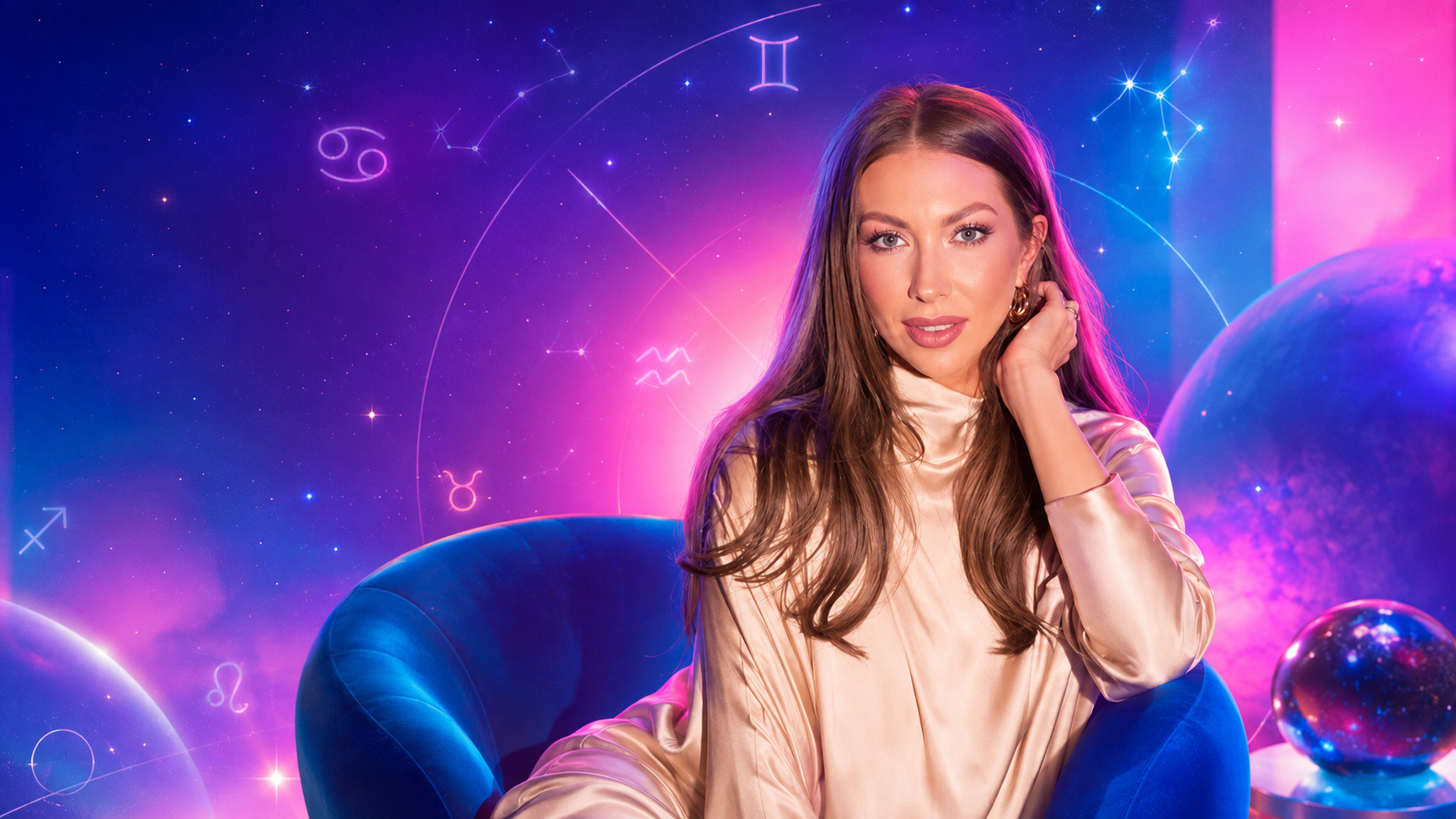
Stassi Schroeder became famous inside a television format built on a strange premise:
Be yourself.
But do it while cameras are watching.
Be spontaneous.
But within a produced television season.
Have real relationships.
Then watch those relationships become episodes.
Say something in anger.
Then hear it repeated back months later after editors, producers, audiences, headlines, memes, and social media have decided what it meant.
Reality television does not simply document identity.
It creates another version of identity alongside it.
And Stassi has spent much of her public life negotiating the distance between those two people.
The person.
And “Stassi.”
That distinction has become especially visible in 2026.
House of Stassi premiered July 29 on Freeform and began streaming its full season on Hulu the following day. The network describes the series as a “meta-docuseries” following Stassi’s return to television, with her husband, children, sister, longtime friends, ambition, and relationships incorporated into the show. Stassi is also one of its executive producers.
That last part matters.
Because she is no longer merely a cast member inside somebody else’s reality-TV machine.
She is now helping produce the machine that turns her own life into television.
And that may be the clearest expression yet of the chart’s central mechanism.
Stassi’s most enduring skill was never simply being a reality star.
It was being able to narrate Stassi.
Then revise her.
Then narrate the revision.
Mercury in Gemini: The Life Becomes Commentary
Stassi’s Mercury is at 18°09′ Gemini.
Mercury is at home in Gemini.
Language is quick.
Associative.
Observational.
Capable of changing angles rapidly.
The mind sees not only what happened but how the event might be framed.
That matters enormously in reality television.
Because the memorable reality star is rarely just the person to whom things happen.
The memorable reality star understands how to describe what is happening while it is happening.
The insult.
The metaphor.
The judgment.
The confessional line.
The cultural reference.
The sentence people repeat after the episode ends.
That is Mercury in Gemini territory.
And for Stassi, Mercury is also stationary direct.
The supplied ephemeris places Mercury essentially at a station, making the planet symbolically louder.
Communication is not peripheral.
It becomes a concentration point.
Stassi’s career after Vanderpump Rules only reinforces the pattern.
Books.
Podcasting.
Interviews.
Live commentary.
A new reality series whose premise openly acknowledges the machinery of reality television.
Her current podcast, STASSI with Tay, remains updated weekly and centers on their own lives alongside relationships, motherhood, pop culture, and commentary.
The platforms change.
The function remains.
Turn life into language.
Mercury Conjunct Venus: The Voice Is Part of the Appeal
Venus sits only about 2°18′ from Mercury.
This is one of the chart’s most important personal signatures.
Mercury communicates.
Venus evaluates.
Mercury says:
Here is what happened.
Venus says:
And here is what I think of it.
Pretty.
Ugly.
Cool.
Embarrassing.
Classy.
Basic.
Appropriate.
Unacceptable.
Funny.
Pathetic.
Worth wanting.
Worth rejecting.
Put those planets together in Gemini and social judgment becomes extremely verbal.
The value system has vocabulary.
This is one reason Stassi’s brand has always been more linguistic than a generic “fashion girl” or “reality star” identity.
Even the branding of her first book made judgment itself the subject.
Next Level Basic: The Definitive Basic Bitch Handbook took the cultural category of being “basic”—something usually used dismissively—and turned it into a branded point of view. Simon & Schuster published the book in 2019, and her publisher continues to describe it and Off with My Head as New York Times bestsellers.
That is Mercury-Venus Gemini.
Take the label.
Talk about the label.
Reframe the label.
Sell the label back as identity.
Reality Television Needs a Narrator
This is where Stassi became particularly effective as a reality-TV character.
A reality show gives the audience behavior.
But a strong narrator gives the audience interpretation.
Who betrayed whom?
Who is being ridiculous?
Who has bad taste?
Who should apologize?
Who is lying?
Who embarrassed themselves?
Who crossed the social line?
The narrator establishes the hierarchy through language.
And early Stassi was extremely good at that.
The public character was not designed around neutrality.
She had categories.
Friends.
Enemies.
Loyalty.
Betrayal.
Taste.
Bad taste.
Correct behavior.
Unacceptable behavior.
That categorical confidence became entertaining precisely because it was so clear.
The audience rarely had to wonder what Stassi thought.
Gemini gave the words.
Venus gave the judgment.
Venus Retrograde: Then the Value System Has to Turn Back on Itself
But Venus is retrograde.
This changes the story.
Retrograde Venus often makes the development of values less straightforward.
The person may have to reconsider:
What do I actually value?
Do I still want what I thought I wanted?
Which social standards are genuinely mine?
Which ones did I absorb?
Which version of success still fits?
What used to feel desirable that now feels empty?
This is not a one-time event.
The value system undergoes revision.
That is especially striking when you look at how Stassi’s own books changed.
Her publisher explains that before Off with My Head, she had been working on a book built around “girlboss” ambition. Then 2020 happened: she lost her job, became a mother, married, and eventually reconsidered the entire premise. The resulting You Can’t Have It All became a book about reducing pressure rather than perfecting the fantasy of doing everything.
That is almost textbook Venus retrograde symbolism.
Not:
I found better branding for the same values.
But:
I had to reconsider what I wanted enough to write a different book.
The Self-Editor
This is why my archive archetype for Stassi is:
The Self-Editor
Because the chart does not merely narrate.
It revises.
The early value system becomes material for the later value system.
The old identity becomes content for the new identity.
The person who once categorized everyone else eventually has to categorize—and then recategorize—herself.
That is a more sophisticated form of Gemini.
Not simply changing your mind.
Developing the ability to look at the person you used to be as though she is another character in the story.
Mercury Square Mars: The Mouth Can Become the Event
Mercury squares Mars within approximately 2°02′.
This is one of the most immediate aspects in the chart.
Mercury speaks.
Mars acts.
When they form a square, language can become action.
A sentence does not simply describe the conflict.
It enters the conflict.
The remark escalates the scene.
The judgment becomes the event.
The confrontation moves because something was said.
This can produce wit.
Speed.
Verbal courage.
Sharp humor.
Excellent television.
It can also produce language used too quickly, accusations made too aggressively, and situations where the consequences of a statement arrive after the statement has already left the mouth.
That is why Mercury-Mars cannot be romanticized only as “sassy.”
Words can hurt.
Words can mobilize.
Words can direct action toward another person.
And Stassi’s public biography contains a rupture where that distinction becomes essential.
2020 Has to Be Named Clearly
In June 2020, Bravo confirmed that Stassi Schroeder and Kristen Doute would not return to Vanderpump Rules. The decision followed renewed attention to a 2018 incident in which the two had contacted police about former cast member Faith Stowers, who is Black, after wrongly identifying her with a woman pictured in a theft story; Stowers had nothing to do with the crime. Stassi and Doute publicly apologized before their firing.
That is what happened.
It should not be softened into the vague phrase:
She got canceled.
And it should not be astrologized into:
Mercury square Mars made her do it.
A natal aspect does not remove agency.
It does not assign moral responsibility to planets.
It does not explain racism away as temperament.
The more responsible astrological observation is narrower:
Speech, judgment, accusation, conflict, and the consequences of how Stassi interprets other people are major developmental arenas in this chart.
The biography made that arena painfully public.
Mercury Square the North Node: The Voice Is Not a Side Issue
Stassi’s Mercury is at 18°09′ Gemini.
Her North Node is at 17°13′ Pisces.
The square is only approximately:
0°56′.
That is extremely tight.
Mercury sits directly at a developmental crossroads.
This means communication is not merely something she is good at.
It is something through which major developmental friction occurs.
How she understands.
How she categorizes.
How she tells the story.
How quickly she decides what someone else meant.
How she uses language when angry.
How she explains herself afterward.
How she changes the explanation when the previous one is no longer sufficient.
All of it matters.
The voice is not sitting safely beside the growth story.
The voice is inside it.
Venus Square the Nodes: What You Value Has to Change Too
Venus is also square the North Node.
Orb:
Approximately 1°22′.
Now both planets in the Gemini conjunction are caught in the nodal configuration.
Mercury:
How do I think about this?
Venus:
What do I value here?
Mercury:
What do I call this person?
Venus:
Do I respect this person?
Mercury:
What story am I telling?
Venus:
What behavior do I reward?
This is much deeper than reputation management.
The nodal squares imply that the developmental issue cannot be solved merely by finding more strategic wording.
If the values underneath the wording remain unchanged, the chart has not actually moved very far.
That is the challenge.
The language has to evolve because the value system has to evolve.
Virgo South Node: The Familiar World Is Classification
The North Node is in Pisces.
That places the South Node in Virgo.
Virgo analyzes.
Sorts.
Distinguishes.
Corrects.
Names what is wrong.
Finds the inconsistency.
Creates categories.
This is an enormously useful function.
But in a social personality, it can become:
Good person.
Bad person.
Good friend.
Bad friend.
Loyal.
Disloyal.
Tasteful.
Tacky.
Acceptable.
Unacceptable.
With me.
Against me.
There is safety in a perfectly labeled universe.
You know where everyone belongs.
And early Stassi was exceptionally good at creating those categories publicly.
That helped make her entertaining.
It also reveals the developmental trap.
Because human beings rarely remain inside the category we initially assign them.
Pisces North Node: The World Becomes Harder to Sort
Pisces moves in the opposite direction.
It complicates clean boundaries.
Pisces asks for:
Empathy.
Humility.
Ambiguity.
Compassion.
Surrender.
Imagination.
Recognition that another person has an interior reality you may not understand.
The developmental movement is not:
Virgo bad, Pisces good.
Virgo gives discernment.
Pisces gives context.
The movement is:
From certainty about the category toward greater humility about the human being inside it.
That is a profound shift for a chart whose public power came partly from excellent judgment.
Because the North Node asks:
What if being able to judge quickly is not always the same thing as understanding accurately?
Mars Conjunct the North Node: Growth Has to Become Behavior
Mars is at 20°10′ Pisces.
The North Node is at 17°13′ Pisces.
Conjunction:
Approximately 2°58′.
This changes the nodal story.
Growth cannot remain intellectual.
It cannot remain:
I understand now.
I have different language now.
I can explain why the earlier version of me was wrong now.
Mars asks:
What do you do differently?
Pisces Mars acts differently from the aggressive side of Mercury square Mars.
It asks:
Can action include empathy?
Can action happen without making someone an opponent?
Can I respond before I retaliate?
Can I acknowledge harm even when the outcome was not what I intended?
Can I tolerate uncertainty long enough to understand somebody else’s experience?
Can I act from compassion without needing to control exactly how the interaction ends?
The Mars–Node conjunction makes those questions active.
Not theoretical.
The Chart Is Not About Becoming Nice
That would be too simplistic.
Pisces North Node does not require Stassi to become bland.
Or passive.
Or agreeable.
Or devoid of opinion.
The Gemini intelligence is part of the gift.
The critical capacity is part of the gift.
The sharpness is part of the gift.
The developmental question is:
Can discernment exist without dehumanization?
Can someone be wrong without becoming entirely bad?
Can conflict occur without collapsing the other person into a category?
Can you apologize without making the apology another performance of yourself?
Can you change without needing everyone to agree that you have changed?
Those are much more difficult Pisces questions.
Saturn Conjunct Uranus: The Life Breaks and Rebuilds
Then we reach the chart’s most exact stable aspect.
Saturn:
28°56′ Sagittarius.
Uranus:
28°52′ Sagittarius.
Conjunction:
Approximately 0°04′.
Almost exact.
This is generational.
Many people born around this period share the conjunction.
But exactness matters, and its relationship to Stassi’s Sun brings the configuration more directly into the personal architecture.
Saturn builds.
Uranus disrupts.
Saturn stabilizes.
Uranus liberates.
Saturn asks what structure should remain.
Uranus asks what structure has become impossible to continue.
Together, the life pattern can become:
Rupture → reconstruction.
Not change for its own sake.
A structure breaks.
Then something has to be built in the space it leaves behind.
Reinvention Is Not Starting Over
This distinction matters.
Starting over suggests:
Erase everything.
Begin from zero.
That is not Stassi’s pattern.
Her later career keeps reusing material from the earlier one.
The old character becomes subject matter.
The firing becomes subject matter.
The comeback becomes subject matter.
The marriage becomes subject matter.
Motherhood becomes subject matter.
The difficulty of returning to television becomes subject matter.
Even the mechanics of producing a reality show become part of the new reality show.
That is Saturn-Uranus.
The old structure breaks.
But pieces of it become building material.
Sun Opposite Saturn and Uranus: Identity Meets the Rupture
Stassi’s Cancer Sun forms broad out-of-sign oppositions to both Saturn and Uranus.
Sun opposite Saturn · approximately 4°27′
Sun opposite Uranus · approximately 4°31′
The Sun is identity.
Saturn brings consequence.
Uranus brings disruption.
So the identity itself repeatedly encounters moments where continuity becomes impossible.
The person can no longer remain exactly who she was before the event.
Saturn asks:
What are the consequences?
Uranus asks:
What now has to change?
The Sun asks:
Then who am I after this?
This is why I prefer reinvention to “comeback.”
A comeback implies returning to the previous position.
The astrology is more complicated.
The point is not returning unchanged.
The point is building an identity capable of surviving what made the previous structure impossible.
Off with My Head: Turn the Rupture Into a Book
In 2022, Stassi published Off with My Head: The Definitive Basic Btch Handbook to Surviving Rock Bottom*.
Her publisher describes it as a book about the collapse of what she expected 2020 to be: she had bought a home, was engaged, was planning a wedding, and felt professionally successful before the year became what she later framed as her “rock bottom.”
That title is revealing.
Again, the life becomes text.
The rupture does not remain only a private crisis.
Eventually:
The rupture becomes a narrative object.
That is Mercury-Venus Gemini working through Saturn-Uranus.
Something breaks.
Then the narrator begins figuring out how to tell the story of the break.
But Narrating Growth Is Not the Same as Growing
This is where the article should resist becoming a comeback puff piece.
A memoir about self-reflection does not prove transformation.
An apology does not automatically repair harm.
A new television series does not establish moral development.
Astrology cannot certify that someone has “done the work.”
And a person becoming more self-aware about her own narrative does not necessarily mean every person affected by the earlier behavior will experience that narrative the same way.
This matters especially in a chart with so much Gemini.
Gemini can become extremely sophisticated at understanding versions of the story.
The deeper Pisces question is whether the person can tolerate the fact that somebody else’s version may remain painful, critical, or unresolved.
The developmental test is not:
Can I explain my growth convincingly?
It is:
Can I continue growing even when I cannot control whether everyone accepts the explanation?
Cancer Sun: Underneath the Narrator Is the Need for Belonging
Stassi’s Sun sits at 3°22′ Cancer.
Cancer is the emotional center underneath the Gemini narration.
Home.
Family.
Memory.
Loyalty.
Belonging.
Protection.
The private circle.
Who is mine?
Where do I belong?
Who stays?
Cancer identity is often much more relational than it initially appears.
That helps explain why friendship and loyalty could become such enormous themes in Stassi’s early public character.
The Gemini part can make the cutting remark.
Cancer is the part for whom the betrayal may feel emotionally existential.
It is not simply:
You disagreed with me.
It can become:
You are no longer safe enough to belong inside my world.
That is a very different mechanism.
The Later Story Becomes More Cancerian
As Stassi’s public life developed, the center of the story increasingly moved toward:
Marriage.
Children.
Home.
Motherhood.
The family unit.
Her publisher describes her current life in Los Angeles with husband Beau Clark and their two children, and You Can’t Have It All explicitly frames motherhood as one of the experiences that changed how she understood ambition and success.
Then comes 2026.
And the television show is called:
House of Stassi
You almost cannot make the Cancer symbolism more literal.
The House Becomes the Franchise
Early Vanderpump Rules placed Stassi inside a larger ensemble built around Lisa Vanderpump’s restaurant world.
The new series places Stassi herself at the center.
Hulu’s description emphasizes her life with Beau, their two children, her sister, and longtime friends, while Freeform describes the show as following her “next act” as ambition brings her back into the spotlight and cameras place pressure on her closest relationships.
The container has shifted.
From:
The restaurant.
To:
The house.
From:
An employee inside the ensemble.
To:
The person whose private ecosystem becomes the premise.
And Stassi is also an executive producer.
That is a meaningful structural evolution.
The Cancer Sun finally becomes the franchise.
But it does so through Mercury-Venus Gemini:
The home still has to become a story.
From Character to Narrator to Producer
This may be the cleanest way to understand the arc.
At first:
Character.
Stassi appears inside somebody else’s format.
Then:
Narrator.
Books and podcasts allow her to explain herself in her own voice.
Then:
Self-editor.
She revisits old identities, old ambitions, old mistakes, old values.
Now:
Producer.
The person whose life becomes content acquires more influence over the architecture through which the content is created.
Her 2026 Vanity Fair profile describes House of Stassi as her first time executive-producing her own reality series and highlights the show’s deliberately self-aware treatment of reality-TV mechanics and her earlier firing.
That progression is the chart.
Gemini narrates.
Saturn builds.
Uranus changes the structure.
Cancer says:
Make the structure mine.
Sun Opposite Neptune: Where Does Stassi End and “Stassi” Begin?
The Cancer Sun also opposes Neptune within approximately 5°35′.
This is broader than several of the chart’s tighter aspects, but it is highly relevant to a life spent in reality television.
The Sun is identity.
Neptune dissolves boundaries.
What happens when millions of strangers know a version of you?
What happens when intimate relationships become public storylines?
What happens when the audience watches real emotions through an edited structure and then feels entitled to define who you are?
Which Stassi is real?
The person?
The reality-TV character?
The memoir narrator?
The podcast host?
The executive producer?
The wife?
The mother?
The former cast member people remember from Season One?
Neptune says:
The boundaries are never entirely clean.
Reality Television Is a Sun–Neptune Machine
Reality television is built on a contradiction.
It says:
This is real.
And:
This has been produced for television.
Both statements can be true.
The relationship may be real.
The fight may be real.
The emotion may be real.
But somebody chose the episode structure.
Somebody chose the footage.
Somebody chose what came before the commercial break.
Somebody decided which confessional explained the scene.
The audience therefore receives something that is simultaneously:
Reality.
And representation.
That is Neptune.
The image is connected to the person.
But it is not the entire person.
The Persona Eventually Becomes Self-Aware
This is where the current chapter gets interesting.
Stassi is no longer entering reality television as someone unfamiliar with what an edit can do.
She has spent years seeing herself turned into television.
She knows the process.
She knows the audience.
She knows that “Stassi” is a character constructed partly from things she genuinely said and did.
And now that self-awareness becomes part of the show itself.
Her recent Vanity Fair interview describes House of Stassi as deliberately meta, with Stassi discussing her reality-TV history and allowing the new show to revisit uncomfortable parts of her public past.
The persona can now observe the persona.
That is highly Gemini.
The Risk: Self-Awareness Can Become Another Character
But this is also the shadow.
Once a public person becomes skilled at self-analysis, the audience encounters another question:
Is this growth?
Or is “self-aware Stassi” simply the latest highly articulate version of Stassi?
There is no external astrological answer.
And that ambiguity is useful.
Gemini can narrate transformation brilliantly.
Pisces asks for transformation that exceeds narration.
The distinction may be impossible for an audience to fully know.
That is why the chart cannot be reduced to a redemption story.
It is a revision story.
Revision can be sincere.
Revision can be strategic.
Usually, in a public life, it is impossible for strangers to cleanly separate the two.
Jupiter in Taurus: Build Something the Show Cannot Take Away
Jupiter sits at 24°45′ Taurus.
Jupiter expands.
Taurus consolidates value.
This becomes important in a career originally tied to one television franchise.
Taurus asks:
What can I actually keep?
What exists after the season ends?
What remains if the contract disappears?
What has tangible value outside the temporary attention cycle?
Over time, Stassi built work beyond Vanderpump Rules:
Books.
Podcasting.
Touring.
A personal brand.
Then television again.
Her publisher lists three books and identifies Next Level Basic and Off with My Head as New York Times bestsellers, while You Can’t Have It All was also marketed as an instant New York Times bestseller.
That matters.
Because when her Vanderpump Rules job disappeared, the entire economic identity did not have to disappear with it.
Jupiter in Taurus had other assets to expand.
Mars Sextile Jupiter: Build What Can Exist Now
Mars sextiles Jupiter within approximately 4°34′.
Mars acts.
Jupiter creates opportunity.
Pisces adapts.
Taurus stabilizes.
This is useful symbolism for rebuilding because it does not require returning to the exact previous structure.
Pisces Mars can move around the obstacle.
Taurus Jupiter asks whether the new route can become sustainable.
The question becomes less:
How do I get my old life back?
And more:
What life can I build from where I actually am now?
That distinction may be the heart of reinvention.
You Can’t Have It All: The Values Get Edited Again
You Can’t Have It All makes the Venus-retrograde process particularly visible.
The book’s official description says Stassi had originally been writing a “girlboss” guide before the upheavals of 2020 changed what she wanted the project to say. Motherhood, marriage, professional loss, and changing priorities eventually produced a book centered on releasing pressure rather than mastering everything.
That is not merely a career pivot.
Symbolically, it is:
The value system revises the definition of success.
What used to look aspirational no longer has to remain aspirational forever.
Venus retrograde permits:
I wanted that.
Now I want something different.
And I am allowed to admit the difference.
Mutable Dominance: The Chart Is Built to Revise
The stable horoscope contains six mutable placements.
Mercury in Gemini.
Venus in Gemini.
Mars in Pisces.
Saturn in Sagittarius.
Uranus in Sagittarius.
North Node in Pisces.
That is an enormous mutable concentration.
Mutable signs live at transitions.
They are designed to respond to what has already happened.
Cardinal signs initiate.
Fixed signs maintain.
Mutable signs ask:
What needs to change now?
That is why Stassi’s public career can absorb so many versions.
The reality star.
The villain.
The fan favorite.
The author.
The podcaster.
The fired cast member.
The memoirist.
The mother.
The wife.
The returning television personality.
The executive producer.
The chart does not require one identity to remain frozen forever.
The Shadow of Mutability: Is Anything Final?
But constant adaptation has a shadow.
If every identity can be revised, when does the revision stop?
If every mistake can become a chapter, does the narrative machinery begin consuming everything?
If every painful event becomes eventual content, is anything allowed to remain unresolved?
If a person becomes exceptionally good at reframing herself, how do we distinguish evolution from repositioning?
This is the philosophical problem of the Stassi chart.
Not:
Can she change?
Obviously the chart can change.
The harder question is:
What makes change meaningful?
The North Node Gives the Answer: Not Better Branding—Different Relationship
Pisces North Node suggests that meaningful change is not merely cosmetic.
It is relational.
It requires a different relationship to certainty.
To control.
To judgment.
To compassion.
To other people's interior worlds.
To the fact that intent and impact may not match.
To the fact that another person may remain hurt even after you understand yourself better.
To the fact that not every narrative can be resolved with the perfect final paragraph.
That is difficult territory for a storyteller.
Because storytellers like endings.
Pisces sometimes refuses one.
If the Moon Is Libra
If Stassi was born before the Moon entered Scorpio, she has a Libra Moon.
That could add more social awareness, relationship sensitivity, aesthetic responsiveness, and emotional investment in interpersonal balance.
But we cannot use those traits as evidence because the time is unknown.
If the Moon Is Scorpio
If she was born later, the Moon moves into Scorpio.
That would add more fixed water:
Privacy.
Intensity.
Emotional loyalty.
A stronger instinct to remember betrayal.
Greater protectiveness around vulnerability.
Again:
That can sound plausible.
So can Libra.
That is precisely why reverse-engineering the Moon from a television persona would be bad astrology.
We do not know.
The stable chart tells the story without it.
The Shadow: The Narrator Can Become Too Powerful
Every chart architecture contains a failure mode.
This one has several.
Mercury in Gemini can explain around an issue instead of staying inside it.
Mercury conjunct Venus can make a compelling story sound more attractive than a difficult truth.
Mercury square Mars can turn judgment into attack.
Mercury and Venus square the Nodes can make language and social values recurring developmental pressure points.
Virgo South Node can overcategorize people.
Saturn-Uranus can reconstruct quickly enough that the person starts focusing on the new structure before fully integrating why the old one broke.
Sun-Neptune can blur person and persona.
Mutable dominance can become endless repositioning.
And Jupiter in Taurus can allow commercial survival to become mistaken for proof that the deeper lesson has been completed.
The shadow is:
If I can tell the new version of the story convincingly enough, maybe the new story becomes the truth.
Pisces says:
Not necessarily.
Some truths are not yours alone to narrate.
The Mature Chart: Edit Yourself, Not Everybody Else
This may be the clearest developmental movement.
Early Stassi’s power was partly:
Editing the room.
Who belongs.
Who does not.
Who is wrong.
Who embarrassed themselves.
Who betrayed whom.
What everybody should have done instead.
The mature version turns that editorial intelligence inward.
What part of my interpretation was incomplete?
What did I miss?
What do I still not understand?
Which value needs changing rather than defending?
Which version of myself has expired?
What am I willing to release without immediately replacing it with a cleaner narrative?
That is the Self-Editor.
Not someone who endlessly perfects her image.
Someone who eventually realizes:
The thing requiring revision may be the self doing the editing.
House of Stassi: The Rewrite Returns to Television
And now the chart enters its most literal chapter yet.
In 2026, Stassi returns to a television series built around:
Her.
Her house.
Her family.
Her friendships.
Her professional ambition.
Her previous reality-TV identity.
And the pressures created when cameras enter those relationships again.
Freeform describes House of Stassi as a meta-docuseries in which her “closest relationships are put to the test” as she steps back into the spotlight. Hulu places Beau, their children, her sister, Katie Maloney, and other close friends inside the new ensemble.
And Stassi executive produces.
The old character has returned to the old medium.
But not in the old structure.
That's Saturn-Uranus.
The House Is Different Because She Is Different
Or at least:
That is the proposition.
And astrology cannot verify whether the proposition succeeds.
That is what makes the story interesting.
A true reinvention is not proven because the title card says:
New Stassi.
The chart asks whether the underlying relationships have changed.
How does she respond when criticized?
How does she handle losing control of the narrative?
What happens when somebody she loves sees the situation differently?
Does judgment arrive before empathy?
Can the person across from her remain complex?
Can she allow another person's story to coexist with hers?
Those are Pisces North Node questions.
And House of Stassi gives the chart another arena in which to ask them.
What Stassi Schroeder Clark’s Chart Is Actually About
The obvious story is reality television.
The deeper story is authorship under revision.
The Cancer Sun needs belonging.
Mercury in Gemini narrates everything.
Venus in Gemini evaluates the social world.
Mercury conjunct Venus makes the commentary part of the attraction.
Venus retrograde repeatedly revises what deserves to be valued.
Mercury square Mars makes language consequential.
Mercury and Venus square the Nodes place communication and values directly inside the developmental path.
Virgo South Node knows how to categorize.
Pisces North Node asks for compassion where categories fail.
Mars conjunct the North Node demands that development become behavior.
Saturn conjunct Uranus makes rupture and reconstruction inseparable.
Sun opposite Saturn and Uranus repeatedly forces identity to confront consequence and discontinuity.
Sun opposite Neptune makes the boundary between person and public character impossible to simplify.
Jupiter in Taurus asks what lasting value can survive outside one television contract.
And mutable dominance allows the story to keep changing.
The Reality Star Who Turned Reinvention Into the Story
Stassi’s career began with a powerful talent:
She knew how to tell the audience what she thought.
Who was wrong.
What was embarrassing.
What was chic.
What was unforgivable.
What everybody else should understand about the scene.
That clarity made her memorable.
Then life produced a chapter that could not be controlled through one-liners.
Her actions toward Faith Stowers resurfaced.
Bravo fired her.
The public character broke.
And the chart moved into its other architecture:
Saturn conjunct Uranus.
What happens after the structure collapses?
She wrote.
She became a mother.
She married.
She restarted the podcast.
She published another book.
Then another book reconsidered the definition of success itself.
And eventually television returned.
Her podcast is still active in 2026, and House of Stassi now places her back at the center of reality TV—this time as both subject and executive producer.
But the interesting question is no longer:
Can Stassi come back?
She already has.
The chart asks something better.
Who comes back?
The same narrator with better language?
A new set of values?
A person genuinely more capable of ambiguity?
A woman who understands that another person's experience cannot always be edited into her preferred version of events?
A mother whose definition of success has changed?
A television veteran who now understands how much of “reality” is constructed?
Probably some combination.
Because reinvention is rarely clean.
And this chart was never designed for a clean single version of the self.
It is mutable.
Narrative.
Relational.
Self-revising.
Stassi’s public gift has always been turning life into story.
Her developmental challenge is subtler:
Learning that not every story belongs entirely to the person best at telling it.
That is where Gemini has to meet Pisces.
Where commentary meets compassion.
Where judgment meets complexity.
Where the editor discovers that the self is still a draft.
And maybe that is why House of Stassi is such a fitting next chapter.
The house is hers.
The show bears her name.
She helps produce it.
She has more authorship than ever.
But the chart’s deepest lesson has never been simply about gaining control of the narrative.
It is about what happens after you gain it.
Can you leave room for another perspective?
Can you revise without erasing?
Can you acknowledge consequences without making consequences the newest piece of personal mythology?
Can you tell the story of becoming different without needing the story itself to prove that you are?
Those questions remain open.
They should.
Because the best version of this chart is not a perfectly finished character.
It is a person willing to keep editing.
Not the episode.
Not the audience.
Not everyone around her.
Herself.
Stassi Schroeder Clark is The Reality Star Who Turned Reinvention Into the Story.
Frequently Asked Questions
What is Stassi Schroeder Clark’s zodiac sign?
Stassi Schroeder Clark is a Cancer Sun.
She was born on June 24, 1988, with the Sun at approximately 3°22′ Cancer.
Cancer is associated with home, family, belonging, loyalty, memory, protection, and emotional attachment.
Those themes become increasingly important across Stassi’s public life as her story shifts from friendship and relationship drama toward marriage, motherhood, family, and eventually a reality show centered around her own household.
What is Stassi Schroeder’s Moon sign?
Stassi Schroeder’s Moon sign cannot be confirmed without an exact birth time.
At the noon placeholder used for this chart, the Moon is approximately 28°58′ Libra.
The Moon moves into Scorpio later that day, so depending on her actual birth time she could have either:
Libra Moon
or
Scorpio Moon
For that reason, this reading treats her Moon as:
Libra → Scorpio · sign uncertain
and does not use lunar aspects as foundational evidence.
Is Stassi Schroeder a Libra Moon?
Possibly.
At 12:00 noon on June 24, 1988, Stassi’s Moon is still in late Libra.
But because it crosses into Scorpio later that day and her exact birth time is unknown, Libra cannot be treated as confirmed.
A later birth would produce a Scorpio Moon.
Could Stassi Schroeder have a Scorpio Moon?
Yes.
The Moon entered Scorpio later on the day Stassi was born.
If she was born after that ingress, she would have a Scorpio Moon rather than Libra.
Without a verified birth time, choosing either sign based on her television personality would be reverse-engineering the chart rather than responsible astrology.
What is Stassi Schroeder’s rising sign?
Stassi Schroeder’s rising sign is unknown because her exact birth time has not been verified.
The Ascendant changes throughout the day, so a noon placeholder cannot provide a reliable rising sign.
For that reason, this reading excludes:
Ascendant
Houses
Midheaven
House rulers
Angle aspects
House-based interpretations
The analysis focuses on planetary signs and time-stable aspects instead.
Why does Stassi Schroeder’s chart use a noon birth time?
A noon chart is useful when the birth date and location are known but the exact birth time is not.
It allows most planetary signs and many stable aspects to be interpreted without inventing an exact time.
However, houses and chart angles cannot be trusted.
The Moon also requires extra caution because it moves quickly.
In Stassi’s case, the Moon changes signs on her birthday, making her lunar sign uncertain as well.
What are Stassi Schroeder Clark’s major astrological placements?
Her stable placements include:
Sun: Cancer
Mercury: Gemini, stationary direct
Venus: Gemini retrograde
Mars: Pisces
Jupiter: Taurus
Saturn: Sagittarius retrograde
Uranus: Sagittarius retrograde
Neptune: Capricorn retrograde
Pluto: Scorpio retrograde
North Node: Pisces
Her Moon is either late Libra or early Scorpio depending on her actual birth time.
What is the main theme of Stassi Schroeder’s birth chart?
The main theme is self-narrated reinvention.
Stassi has Mercury conjunct Venus in Gemini, giving language, commentary, judgment, and storytelling unusual importance.
Those planets also square her nodal axis, suggesting that how she speaks, interprets people, and defines what she values becomes part of the developmental story.
Meanwhile, Saturn and Uranus are almost exactly conjunct.
That creates a recurring structure of:
Build → rupture → rebuild differently.
Her chart is not simply about being a reality star.
It is about repeatedly revising the public and private story of who she is.
Why is Gemini so important in Stassi Schroeder’s chart?
Stassi has both Mercury and Venus in Gemini.
Mercury describes language, thought, narration, wit, and interpretation.
Venus describes taste, values, attraction, social judgment, and what someone considers desirable or undesirable.
Together in Gemini, those functions become verbal.
Stassi does not simply experience the social world.
She comments on it.
Labels it.
Interprets it.
Turns it into a story.
That makes her voice part of the product.
What does Mercury in Gemini mean in Stassi Schroeder’s chart?
Mercury is traditionally associated with Gemini, making communication especially prominent.
Mercury in Gemini tends to process life through:
Words.
Observation.
Comparison.
Humor.
Quick interpretation.
Multiple perspectives.
Narrative.
For a reality television personality, this can be extremely useful.
A scene happens.
Then the person immediately knows how to describe why the scene was funny, ridiculous, offensive, embarrassing, or important.
Stassi’s ability to narrate what was happening around her became one of the most recognizable features of her public persona.
Why is Stassi Schroeder’s Mercury stationary important?
Mercury was stationary direct on the day of Stassi’s birth.
A stationary planet appears to move extremely slowly from Earth and is often treated astrologically as especially concentrated or emphasized.
That makes Mercury themes even harder to ignore.
Writing.
Talking.
Commentary.
Storytelling.
Interpretation.
Framing experience through words.
Across television, books, podcasts, and interviews, language repeatedly becomes one of the main mechanisms through which Stassi turns life into media.
What does Mercury conjunct Venus mean in Stassi Schroeder’s chart?
Mercury conjuncts Venus within approximately 2°18′.
Mercury communicates.
Venus evaluates.
Together, they can create a voice that does not merely describe events but constantly assigns social meaning to them.
What is attractive?
What is embarrassing?
What is stylish?
What is basic?
Who behaved badly?
What relationship is working?
What is worth wanting?
The conjunction helps explain why Stassi’s appeal has always involved not just participating in the scene but commenting on the scene.
What does Venus retrograde mean in Stassi Schroeder’s chart?
Venus retrograde can symbolize a value system that requires repeated reconsideration.
The person may have to revisit:
What do I actually want?
What does success mean to me now?
Which values still fit?
Which ambitions belong to an older version of myself?
That is especially relevant to Stassi because her public narrative has repeatedly involved revising her definition of success, relationships, ambition, and identity.
The values themselves become part of the rewrite.
What does Mercury square Mars mean in Stassi Schroeder’s chart?
Mercury squares Mars within approximately 2°02′.
Mercury speaks.
Mars acts.
In a square, language can become action.
A sentence can escalate the situation.
A judgment can become the conflict.
This aspect can correspond symbolically with:
Sharp speech.
Fast reactions.
Verbal courage.
Cutting humor.
Arguments.
Statements made before all consequences have been considered.
It can make someone extremely entertaining in a reality-TV environment.
It can also make communication a major arena where responsibility matters.
Does Mercury square Mars explain Stassi Schroeder’s controversies?
No.
Astrology does not excuse, cause, or remove responsibility for specific behavior.
An aspect should not be used to say that Stassi acted a certain way because “Mercury square Mars made her do it.”
The responsible interpretation is narrower.
Her chart places speech, judgment, conflict, and action in strong tension with one another.
That makes communication a major developmental arena.
What someone chooses to do inside that arena remains their responsibility.
What happened with Stassi Schroeder in 2020?
In 2020, Stassi Schroeder and Kristen Doute were fired from Vanderpump Rules after renewed attention to their actions toward former cast member Faith Stowers, including wrongly identifying Stowers in connection with a theft and contacting police.
That event became a major rupture in Stassi’s public and professional life.
Astrologically, this reading does not frame the incident as planetary causation.
Instead, it becomes part of the larger developmental story around judgment, communication, consequences, and how a public identity is reconstructed after serious mistakes.
What is Stassi Schroeder’s North Node?
Stassi Schroeder has a North Node in Pisces.
The opposite South Node is in Virgo.
This creates a developmental axis between:
Virgo: classification, criticism, precision, correction, analysis
and
Pisces: compassion, ambiguity, humility, empathy, surrender, and recognition that not everything can be neatly categorized.
For Stassi, that axis becomes especially important because Mercury and Venus square it while Mars sits close to the North Node.
What does a Pisces North Node mean for Stassi Schroeder?
A Pisces North Node suggests development through greater comfort with complexity, empathy, ambiguity, and perspectives that cannot be controlled through perfect analysis.
The chart already knows how to classify.
Who is right?
Who is wrong?
Who is loyal?
Who is disloyal?
Who behaved appropriately?
Pisces asks a different question:
What am I missing about the other person’s experience?
The movement is not from intelligence to confusion.
It is from judgment alone toward judgment informed by compassion.
What does a Virgo South Node mean in Stassi Schroeder’s chart?
A Virgo South Node describes familiar territory around:
Analysis.
Categorization.
Critique.
Correctness.
Distinguishing what works from what does not.
Those are useful skills.
But overused, they can create a world where everyone is sorted too quickly into categories.
Good friend.
Bad friend.
Right.
Wrong.
Tasteful.
Embarrassing.
Pisces North Node asks the chart to tolerate situations where the human being is more complicated than the category.
What does Mercury square the North Node mean in Stassi Schroeder’s chart?
Mercury squares the North Node within approximately 0°56′.
This is one of the tightest personal aspects in her chart.
It suggests that communication itself sits directly inside the developmental story.
How she speaks.
How quickly she forms judgments.
How she explains other people.
How she explains herself.
How she revises the story later.
These are not secondary themes.
The voice becomes one of the main places where growth is tested.
What does Venus square the North Node mean in Stassi Schroeder’s chart?
Venus squares the North Node within approximately 1°22′.
Venus describes values, taste, social relationships, attraction, and what someone considers desirable or worthy.
Its square to the nodal axis suggests that development also requires changes in what is valued, not merely changes in language.
Better wording is not enough if the underlying standards remain unchanged.
The chart asks whether the value system itself can evolve.
What does Mars conjunct the North Node mean in Stassi Schroeder’s chart?
Mars conjuncts the North Node within approximately 2°58′.
Mars represents behavior, action, conflict, motivation, and how someone pursues what they want.
Its conjunction with the Pisces North Node means the developmental direction eventually has to become behavioral.
It is not enough to say:
I understand now.
Mars asks:
What do you do differently now?
In Pisces, that can involve acting with more empathy, flexibility, restraint, humility, or awareness of another person’s experience.
Does Stassi Schroeder’s chart show a redemption arc?
A birth chart cannot certify redemption.
It can describe developmental themes.
Whether someone has genuinely changed requires behavior over time and may be experienced differently by different people.
Stassi’s chart strongly emphasizes revision, consequence, altered values, and behavioral development.
That makes reinvention a meaningful astrological theme.
But reinvention and redemption are not automatically the same thing.
What does Saturn conjunct Uranus mean in Stassi Schroeder’s chart?
This is one of the most striking aspects in her horoscope.
Saturn and Uranus are conjunct within approximately 0°04′.
Saturn represents:
Structure.
Rules.
Consequences.
Stability.
Institutions.
Uranus represents:
Rupture.
Disruption.
Freedom.
Reinvention.
Breaking an old structure.
Together, they create a paradox:
Build something, encounter disruption, and then reconstruct it differently.
That pattern is central to the reading.
Is Stassi Schroeder’s Saturn–Uranus conjunction exact?
Almost.
Saturn is approximately 28°56′ Sagittarius.
Uranus is approximately 28°52′ Sagittarius.
They are separated by only about 0°04′.
The conjunction is generational, but its extraordinary exactness and its relationship to Stassi’s Sun make it especially relevant to her personal chart architecture.
Why does Saturn conjunct Uranus symbolize reinvention?
Because Saturn and Uranus want opposite things.
Saturn preserves the structure.
Uranus changes the structure.
When tightly joined, they cannot function independently.
The result can be:
Construct.
Disrupt.
Reconstruct.
The new structure cannot simply be the old one restored exactly as it was.
Something has to change.
That is why Stassi’s public arc is better described as reinvention than simply “comeback.”
What does Sun opposite Saturn mean in Stassi Schroeder’s chart?
Stassi’s Cancer Sun broadly opposes Saturn within approximately 4°27′.
The Sun represents identity.
Saturn represents limits, consequences, responsibility, and structures that force maturity.
Symbolically, this can describe periods when the existing identity encounters conditions it cannot simply ignore.
The question becomes:
Who am I when consequences require me to change?
What does Sun opposite Uranus mean in Stassi Schroeder’s chart?
The Sun broadly opposes Uranus within approximately 4°31′.
Uranus disrupts continuity.
The aspect can symbolize identity repeatedly confronting:
Unexpected change.
Breaking with the past.
Freedom from an old role.
Reinvention.
The need to become different because remaining exactly the same is no longer possible.
Combined with Sun opposite Saturn, it strengthens the rupture-and-rebuild theme.
What does Sun opposite Neptune mean in Stassi Schroeder’s chart?
The Cancer Sun broadly opposes Neptune within approximately 5°35′.
Neptune can blur boundaries around identity and image.
That is especially interesting in the chart of a reality television personality.
Reality TV gives the public access to a real person through an edited character based on that person.
The audience may then feel that the televised version is the entire individual.
Sun–Neptune asks:
Where does Stassi end and “Stassi” begin?
Why is Sun opposite Neptune relevant to reality television?
Reality television is built around blurred boundaries between reality and representation.
The emotions may be real.
The relationships may be real.
The conflict may be real.
But the footage is edited, structured, produced, and presented as a television narrative.
That makes it difficult to separate:
Person.
Character.
Image.
Public projection.
Sun–Neptune is useful symbolism for precisely that problem.
Why is “The Self-Editor” a good archetype for Stassi Schroeder?
Because Stassi’s chart repeatedly connects identity with narration and revision.
Mercury in Gemini tells the story.
Venus in Gemini decides what the story values.
Venus retrograde reconsiders those values.
Mercury and Venus square the Nodes, placing language and values inside the developmental story.
Saturn conjunct Uranus repeatedly breaks and rebuilds structures.
The mature expression is not simply editing everyone around her.
It is becoming willing to edit herself.
Why is Stassi’s chart so mutable?
Excluding the uncertain Moon, she has six mutable placements:
Mercury in Gemini
Venus in Gemini
Mars in Pisces
Saturn in Sagittarius
Uranus in Sagittarius
North Node in Pisces
Mutable signs specialize in adjustment.
They respond to what has already happened.
They revise.
Reframe.
Adapt.
Change direction.
That makes this chart unusually capable of moving between different versions of identity.
What does mutable dominance mean for Stassi Schroeder?
Mutable dominance suggests that adaptation is one of the chart’s strongest tools.
That can support:
Reinvention.
Changing careers.
Reframing experiences.
Finding new language.
Moving into different public roles.
The shadow is endless repositioning.
If every chapter can be rewritten, the deeper question becomes:
When is the rewrite genuine development, and when is it simply another version of the brand?
What does Jupiter in Taurus mean in Stassi Schroeder’s chart?
Stassi has Jupiter in Taurus.
Jupiter expands.
Taurus consolidates value.
This can symbolize growth through building something more durable than temporary attention.
That is relevant to a career that eventually expanded beyond one reality-TV role into books, podcasting, touring, personal branding, and new television work.
Taurus asks:
What still has value after the season ends?
What does Mars sextile Jupiter mean in Stassi Schroeder’s chart?
Mars sextiles Jupiter within approximately 4°34′.
Mars acts.
Jupiter opens possibilities.
The aspect can support initiative that leads to new opportunities.
Because Mars is in Pisces and Jupiter is in Taurus, the symbolism is less about forcing the old structure to return and more about adapting toward something that can become sustainable.
The question is:
What can I build from where I actually am now?
Why is Cancer important to Stassi Schroeder’s later public life?
Although much of Stassi’s public style feels strongly Gemini because of her commentary, her Sun is in Cancer.
Cancer centers:
Home.
Family.
Children.
Marriage.
Belonging.
Emotional continuity.
Those themes have become increasingly central to her public story as she has moved into marriage, motherhood, and a television project explicitly built around her household and closest relationships.
Is House of Stassi astrologically significant?
Symbolically, yes.
It is difficult not to notice the Cancerian imagery of a Cancer Sun eventually returning to television with a series called House of Stassi.
But the more important symbolism is structural.
Stassi originally became famous as a cast member inside someone else’s reality-TV ecosystem.
In House of Stassi, she becomes the central subject and an executive producer.
The progression is:
Character → narrator → self-editor → producer.
That fits the chart’s themes of authorship and reinvention remarkably well.
Does House of Stassi prove Stassi has changed?
No.
Professional success or a television comeback does not prove personal growth.
A natal chart cannot verify whether someone has fully changed either.
The more interesting question is whether the new circumstances allow the developmental themes of the chart to operate differently.
How does she handle disagreement?
Criticism?
Loss of control?
Other people’s perspectives?
Responsibility?
Those questions reveal more about development than simply whether the show succeeds.
What does Stassi Schroeder’s chart say about motherhood?
Without a verified birth time, astrology should not make house-based claims about motherhood.
However, her stable Cancer Sun makes family, belonging, protection, and emotional continuity important identity themes.
Her public life has increasingly centered those themes as marriage and motherhood became part of her story.
The chart does not predict motherhood.
It offers symbolism for why family can become a powerful arena through which identity is reorganized.
What does Stassi Schroeder’s chart say about writing?
Writing and narration are among the clearest stable themes in the chart.
Mercury is:
In Gemini.
Stationary.
Conjunct Venus.
Square Mars.
Square the nodal axis.
That makes language unusually important.
Books, podcasting, reality-TV confessionals, interviews, and public storytelling all provide different media for the same underlying function:
Turning experience into language.
What is Stassi Schroeder’s strongest astrological aspect?
There is no single aspect that explains her entire chart, but several stand out.
Saturn conjunct Uranus · approximately 0°04′
The rupture-and-rebuild mechanism.
Mercury square North Node · approximately 0°56′
Communication as developmental territory.
Venus square North Node · approximately 1°22′
Values and relationships as developmental territory.
Mercury square Mars · approximately 2°02′
Language becoming action and conflict.
Mercury conjunct Venus · approximately 2°18′
The voice, taste, and social commentary becoming intertwined.
Together, they create the deeper story of self-narrated reinvention.
Is Stassi Schroeder’s chart about being controversial?
Not fundamentally.
Controversy is part of the biography, but it is not the deepest mechanism in the horoscope.
The chart is more strongly about:
Narration.
Judgment.
Consequences.
Revision.
Changing values.
Rebuilding identity.
Learning a different relationship to other people’s perspectives.
The more interesting archetype is not:
The Controversial Reality Star.
It is:
The Self-Editor.
What is Stassi Schroeder Clark’s birth chart really about?
At its deepest level, Stassi’s chart is about who gets to author the next version of the self.
The Cancer Sun wants belonging.
Mercury in Gemini narrates.
Venus in Gemini evaluates.
Mercury conjunct Venus makes the commentary part of the appeal.
Venus retrograde revises the value system.
Mercury square Mars makes words consequential.
Mercury and Venus square the Nodes, placing language and values directly inside the developmental path.
Virgo South Node knows how to classify.
Pisces North Node asks for humility when the categories fail.
Mars conjunct the North Node says growth eventually has to become behavior.
Saturn conjunct Uranus makes rupture and reconstruction inseparable.
Sun opposite Neptune complicates the boundary between person and persona.
And mutable dominance makes revision one of the chart’s primary survival mechanisms.
Stassi’s gift is being able to tell the story.
Her developmental challenge is realizing that being the best narrator in the room does not mean every story belongs entirely to her.
That is why her chart is ultimately less about reality television than it is about authorship.
Not simply:
Who is Stassi?
But:
Who is willing to revise her—and who gets a voice in the revision?