Written in the Stars: The Birth Chart of Ella Langley, the Country Voice That Kept Its Edge
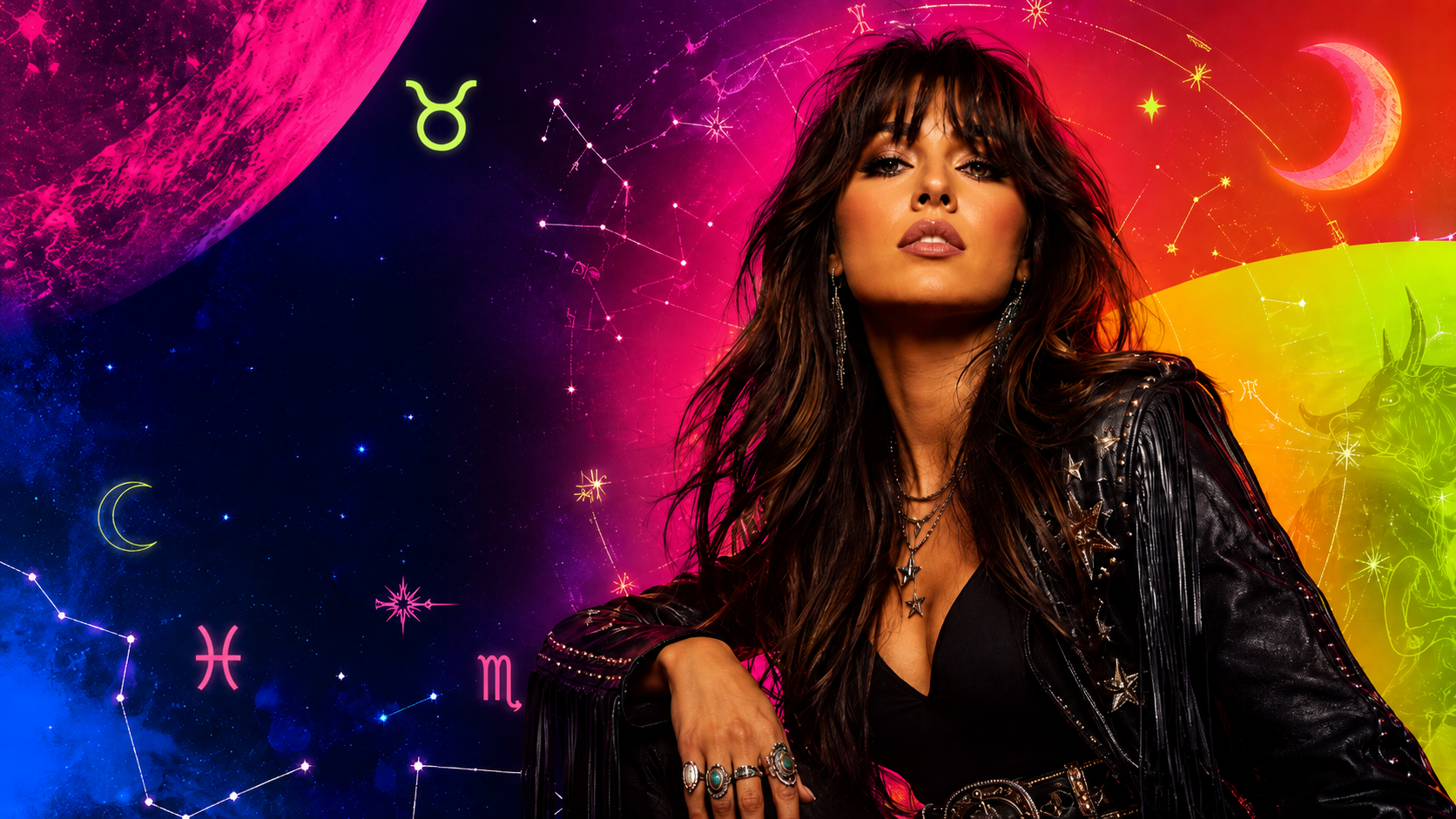
Ella Langley’s rise can look sudden from a distance.
The first country-radio No. 1.
The viral duet.
The awards stages.
The arena crowds.
The record-breaking night when nearly every category bearing her name seemed to end with another trip to the microphone.
But the public breakthrough arrived after years of private construction.
Langley grew up in Hope Hull, Alabama, where music was part of the family environment before it became a career. She eventually moved to Nashville and spent years writing, performing, building relationships, and learning what parts of her voice could be developed without being polished into anonymity. Songs such as “Country Boy’s Dream Girl” and “Damn You” began widening the audience before the wider industry understood how quickly that audience could grow.
Her 2024 debut album, hungover, introduced a complete artistic world: flirtation with consequences, humor sharpened by disappointment, vulnerability that refused to become helplessness, and a voice that sounded lived-in even when the career surrounding it was still new.
Then “you look like you love me,” her collaboration with Riley Green, changed the scale.
The song became a major commercial breakthrough and won Musical Event of the Year at the 2024 CMA Awards. At the 2025 ceremony, Langley and Green’s collaboration collected three more awards, including Single and Song of the Year.
Her second album, Dandelion, arrived in April 2026.
The eighteen-song project returned repeatedly to Alabama, family memory, love, loss, faith, ambition, and the more complicated experience of becoming successful enough that success itself has to be emotionally processed. Langley described the album as a carefully constructed reflection of where she was in her life—a time capsule rather than a collection assembled only to extend momentum. The album debuted at No. 1 on the Billboard 200.
One month later, she led the 2026 ACM Awards with a record-breaking seven trophies, including Female Artist of the Year, Artist-Songwriter of the Year, Song of the Year, and Single of the Year recognition connected to “Choosin’ Texas.”
The career now contains several Ella Langleys at once:
The Alabama musician shaped by inherited songs
The Nashville songwriter who worked before the room turned toward her
The conversational provocateur
The traditionalist with modern instincts
The romantic lead who never sounds completely conquered
The country star whose vulnerability arrives with its defenses intact
The public figure learning how to remain a person inside the machinery of attention
The chart contains all of them.
Its central organizing fact is unusually clear.
Using traditional planetary rulership, every planet and the True North Node ultimately report to one placement: Mars in Scorpio, retrograde.
The Taurus Sun reports to Venus.
Venus in Gemini reports to Mercury.
Mercury in Aries reports to Mars.
The Sagittarius Moon reports to Jupiter.
Jupiter in Aries reports to Mars.
Saturn in Taurus follows the same Venus–Mercury–Mars chain.
Uranus and Neptune in Aquarius traditionally report to Saturn, which eventually reports to Mars.
Pluto in Sagittarius reports to Jupiter, then Mars.
The Leo North Node reports to the Sun, which begins the chain again.
Every road ends in Scorpio.
Every road ends in Mars.
This matters even more because Mars is the chart’s only placement in a water sign.
The chart is not flooded with emotion.
It concentrates emotion.
Feeling is stored under pressure until it becomes a decision, a boundary, a lyric, a performance, or a refusal.
The voice can be playful.
The presentation can be flirtatious.
The Sagittarius Moon can seek openness and movement.
Mercury in Aries can say the first true thing before the room has prepared for it.
But underneath the motion, the chart is governed by a private, strategic, and emotionally determined engine.
Ella Langley did not keep the edge around her voice by accident.
The edge is where the entire chart reports.
A Note About the Birth Data
This portrait uses the planetary positions supplied for:
May 3, 1999, at 12:00 noon
Hope Hull, Alabama
The time has been set to noon rather than documented as a verified birth time.
The planetary longitudes supplied for the date are retained, but this reading excludes:
Ascendant and Descendant
Midheaven and Imum Coeli
Houses
House rulerships
Angularity
Claims based on planets occupying particular houses
The supplied chart places the Moon at 16°30′ Sagittarius.
That degree is sufficiently far from either boundary of Sagittarius for the Moon sign to remain secure across the local birth date. The exact Moon degree and every lunar aspect orb remain noon-based and provisional.
No rising sign should be published for this chart.
The Chart at a Glance
Principal placements
Sun at 12°49′ Taurus
Noon Moon at 16°30′ Sagittarius
Mercury at 21°14′ Aries
Venus at 24°25′ Gemini
Mars at 0°46′ Scorpio, retrograde
Jupiter at 18°48′ Aries
Saturn at 7°33′ Taurus
Uranus at 16°39′ Aquarius
Neptune at 4°22′ Aquarius, stationary retrograde
Pluto at 9°50′ Sagittarius, retrograde
True North Node at 17°45′ Leo, retrograde
Tightest stable aspects
Jupiter trine North Node — approximately 1°03′
Uranus opposite North Node — approximately 1°06′
Jupiter sextile Uranus — approximately 2°09′
Mercury conjunct Jupiter — approximately 2°25′
Mercury sextile Venus — approximately 3°11′
Saturn square Neptune — approximately 3°11′
Mercury trine North Node — approximately 3°28′
Mars square Neptune — approximately 3°36′
Sun square Uranus — approximately 3°50′
Mercury sextile Uranus — approximately 4°34′
Sun square North Node — approximately 4°56′
Sun conjunct Saturn — approximately 5°16′
Venus sextile Jupiter — approximately 5°36′
Mars opposite Saturn — approximately 6°47′
Noon-based lunar contacts
Moon sextile Uranus — approximately 0°08′
Moon trine North Node — approximately 1°14′
Moon trine Jupiter — approximately 2°17′
Moon trine Mercury — approximately 4°43′
Moon conjunct Pluto — approximately 6°41′
Moon opposite Venus — approximately 7°54′
The Sagittarius Moon sign is secure. Its exact degree and every lunar aspect orb remain provisional.
The Governing Planet: Mars in Scorpio Retrograde
Mars is at 0°46′ Scorpio and retrograde.
In traditional astrology, Mars rules Scorpio.
It therefore answers to itself.
Because every other placement eventually reaches Mars through the chart’s dispositor chains, Mars becomes the sole final dispositor.
This gives it unusual authority.
Mars governs action, desire, anger, initiative, competition, separation, courage, and the instinct to protect what cannot be negotiated away.
Scorpio concentrates those functions.
It does not act merely because movement is available.
It acts when the emotional stakes become undeniable.
Scorpio Mars remembers.
It notices the shift in loyalty.
It recognizes when attraction contains a power struggle.
It knows when a seemingly casual exchange has become consequential.
It can wait longer than others expect and then move with complete commitment.
Retrograde motion turns part of this force inward.
Action may begin privately.
Anger may be examined, rewritten, converted into ambition, or held until the person understands exactly what the anger is protecting.
The public may see the final boundary without witnessing the internal argument that produced it.
This placement does not require every song to be dark.
It does require the song to contain a real stake.
Someone wants something.
Someone is withholding something.
Someone has already crossed a line.
Someone knows more than she is saying.
Someone has mistaken attraction for power.
Someone is about to discover that charm is not the same as surrender.
Mars in Scorpio supplies the teeth beneath the Gemini wit and Sagittarius openness.
It explains why a flirtatious performance can still feel controlled.
The invitation does not dissolve the boundary.
The smile does not remove the possibility of consequence.
The singer can enter the scene without giving the scene complete authority over her.
One Water Placement Governs the Entire Chart
Among the ten planets and True North Node, Mars is the only placement in water.
That does not make the chart emotionally empty.
It makes emotion concentrated.
Water is not distributed among several psychological functions.
It is gathered inside the planet of action.
Feeling becomes motivation.
Attachment becomes loyalty.
Disappointment becomes a decision.
Desire becomes pursuit.
Betrayal becomes a line that will not be crossed twice.
The chart may not always begin by discussing the feeling.
Mercury in Aries may speak through the immediate conclusion.
The Taurus Sun may hold its position.
The Sagittarius Moon may change environments or search for a larger perspective.
Venus in Gemini may turn the situation into dialogue.
But eventually, the system returns to Mars.
The real questions become:
What does the person want badly enough to act on?
What must remain protected?
What has changed the emotional balance permanently?
What truth cannot be softened without becoming false?
The art becomes strongest when those questions are allowed into the room.
Taurus Sun: The Identity Holds Its Ground
The Sun is at 12°49′ Taurus.
Taurus develops identity through continuity.
It wants the voice to belong to the body.
It wants value to remain recognizable after trends change.
It wants the object, relationship, sound, or career to become more substantial through repeated contact with time.
Taurus is sometimes reduced to comfort.
Its deeper principle is preservation.
It asks what deserves to last.
Langley’s chart contains substantial fire and air, creating speed, humor, experimentation, and rapid exchange.
The Taurus Sun prevents the chart from becoming merely reactive.
Something underneath the motion remains steady.
The voice has weight.
The taste has memory.
The person knows when an outside suggestion would improve the form and when it would remove the quality that made the form hers.
This is central to the portrait.
The voice keeps its edge because the Taurus Sun does not surrender ownership easily.
It may develop slowly.
It may listen.
It may learn the industry.
It may refine technique and presentation.
But once it recognizes its own sound, it becomes increasingly difficult to move away from it.
Taurus asks:
Does this still feel like mine?
Does the music have a physical reality?
Can the audience feel the grain in the voice?
Will the song remain useful after the immediate moment has passed?
Is the success building something durable, or merely creating more noise?
The Sun’s conjunction with Saturn makes those questions more serious.
Sun Conjunct Saturn: Success Must Be Built to Last
The Sun conjoins Saturn within approximately 5°16′.
Saturn gives identity weight, endurance, accountability, caution, and an awareness of time.
In Taurus, the conjunction can create enormous staying power.
It does not necessarily expect immediate recognition.
It expects the work to become undeniable through repetition.
This is a chart capable of tolerating the period before public confirmation.
The person may experience achievement as something earned rather than simply received.
Praise matters, but it does not completely silence the internal standard.
There is always another question:
Can it be repeated?
Can the voice survive touring?
Can the career hold pressure?
Can success remain connected to the values that built it?
Can the person continue living inside the structure after the structure becomes large?
Sun–Saturn can produce seriousness beneath a youthful or playful surface.
The Sagittarius Moon and Gemini Venus may appear socially light.
Mercury and Jupiter in Aries may move quickly.
But the Taurus Sun–Saturn conjunction is keeping accounts.
It remembers the cost.
It notices whether the foundation is strong enough for the next level.
The audience sees arrival.
Saturn remembers preparation.
The Shadow of Sun–Saturn
The same endurance that builds a career can make rest feel undeserved.
The internal standard can continue increasing after the external goal has been reached.
A person with Sun conjunct Saturn may confuse self-respect with constant proof.
In Taurus, identity may become overly attached to what has already been built.
Change can feel dangerous because it threatens the continuity Saturn worked so hard to establish.
The mature conjunction does not abandon discipline.
It allows discipline to protect life rather than consume it.
The standard must become sustainable.
The First Fixed T-Square: Sun, Uranus, and the North Node
One of the chart’s central structures is a fixed T-square.
Uranus in Aquarius opposes the True North Node in Leo within approximately 1°06′.
The Taurus Sun squares Uranus within approximately 3°50′.
The Sun also squares the North Node within approximately 4°56′.
The Sun becomes the apex.
This creates tension among three questions:
Who am I when no one is asking me to perform?
How much individuality can the public structure tolerate?
What kind of visibility belongs to the developmental path?
Uranus in Aquarius resists standardization.
It wants independence, experimentation, difference, and enough distance from convention to recognize when convention has stopped functioning.
The North Node in Leo asks for visible creative authorship.
It is not enough to remain one talented contributor among many.
The person must gradually risk becoming identifiable.
The Taurus Sun at the apex must create a stable identity capable of holding both demands.
She cannot become distinctive by changing into every new thing.
She cannot become durable by refusing every disruption.
The path requires a recognizable center strong enough to innovate.
That is the fixed challenge.
Taurus says:
Keep what is real.
Aquarius says:
Break what is limiting.
Leo says:
Let them know whose voice they are hearing.
The tension does not disappear once recognition arrives.
Recognition makes it more consequential.
As the audience grows, the pressure to repeat what already worked also grows.
The fixed T-square asks whether the person can maintain ownership without becoming trapped inside a previous version of herself.
Sun Square Uranus: The Original Cannot Be Manufactured
The Sun squares Uranus within approximately 3°50′.
Sun–Uranus aspects make individuality non-negotiable.
The person may cooperate with a system, but she cannot thrive indefinitely inside a structure requiring self-erasure.
Taurus and Aquarius are both fixed signs.
Neither changes casually.
Taurus protects what has proven valuable.
Aquarius protects the right to depart from the approved template.
The square produces a person who may seem traditional from one angle and quietly radical from another.
The music can remain recognizably country while the delivery, perspective, attitude, styling, or interpersonal power changes.
The purpose is not rebellion as decoration.
Uranus becomes useful when it protects authenticity.
The song must not sound as though anyone could have sung it.
The production must not polish away every irregularity.
The artist must remain present inside the product.
This contact can also produce sudden changes in visibility.
The person may work steadily for years and then enter a much larger public field through one unexpected opening.
The breakthrough appears abrupt.
The individuality that made the breakthrough possible was not.
Uranus Opposite the North Node: Difference Is Part of the Path
Uranus opposes the North Node within approximately 1°06′.
This is one of the chart’s tightest stable contacts.
The developmental path repeatedly encounters disruption.
The planned route may not be the route that creates growth.
The person may enter opportunity through unusual timing, new technology, an unexpected collaboration, or a performance that feels less controlled than the official strategy.
Uranus can make the future arrive early.
The North Node in Leo asks the person to inhabit visibility rather than only critique or disrupt it.
This is important.
The chart is not meant to remain permanently outside the center.
It must bring difference into the center without allowing the center to neutralize it.
The mature opposition says:
I can participate without becoming interchangeable.
I can be seen without becoming completely owned by the gaze.
I can accept recognition without pretending recognition created the talent.
Mercury Conjunct Jupiter in Aries: The Line Arrives First
Mercury is at 21°14′ Aries.
Jupiter is at 18°48′ Aries.
They conjoin within approximately 2°25′.
Mercury describes language, thought, phrasing, perception, storytelling, and the way information moves.
Jupiter enlarges whatever it touches.
In Aries, both planets operate quickly.
The thought becomes a sentence before caution has finished editing it.
The sentence creates momentum.
The phrase can be blunt, funny, provocative, exaggerated, generous, fearless, or impossible to ignore.
This is an excellent signature for memorable lines.
Aries Mercury does not want to spend six verses approaching the point.
It wants the line that changes the temperature immediately.
Jupiter makes the line larger.
The statement becomes a hook.
The private reaction becomes a public story.
The small scene becomes an anthem.
The conjunction supports confidence in the voice, but confidence is not the same as certainty.
Jupiter can occasionally make the statement larger than the available evidence.
Aries can speak before the full emotional consequence has arrived.
The chart’s Mars rulership corrects this over time.
Mercury and Jupiter report to Mars in Scorpio.
The first sentence may be fast, but the deeper meaning is not shallow.
Eventually, the words reveal what the person wanted, feared, suspected, or refused.
This is why the conversational quality can carry more emotional weight than it initially appears to hold.
The line arrives first.
The consequence follows.
Mercury Sextile Venus: Flirtation Is a Form of Storytelling
Mercury sextiles Venus within approximately 3°11′.
Venus is in Gemini, a sign ruled by Mercury.
This creates a direct relationship between language and attraction.
Charm is verbal.
Desire moves through timing, phrasing, teasing, implication, interruption, and the pleasure of saying slightly more than the room expected.
The aspect supports lyrics that feel spoken rather than formally announced.
The audience can hear the scene.
A character enters.
Someone looks across the room.
A sentence becomes an invitation.
Another sentence changes who has the advantage.
Mercury in Aries gives the dialogue nerve.
Venus in Gemini gives it flexibility.
The result is a social voice capable of being bold without becoming heavy.
The flirtation contains intelligence.
The joke contains observation.
The conversational surface creates enough openness for the deeper Mars-ruled material to enter.
Mercury Sextile Uranus: The Unexpected Phrase Opens the Door
Mercury sextiles Uranus within approximately 4°34′.
This aspect supports originality in language.
The mind looks for the route not already exhausted by everyone else.
It can create unusual phrasing, abrupt perspective changes, surprising humor, and lines that sound both spontaneous and precisely placed.
Aries Mercury moves quickly.
Aquarius Uranus sees the pattern from outside it.
Together, they can recognize what a conventional lyric or interview answer is expected to say and choose a sharper route.
The sextile is cooperative rather than permanently disruptive.
Originality can be used.
The unusual idea can still become a chorus.
The experiment can still become a recognizable song.
This matters in a chart with strong Taurus.
Innovation is not required to erase structure.
It is required to keep structure alive.
Mercury Trine the North Node: The Path Requires a Recognizable Voice
Mercury trines the North Node within approximately 3°28′.
Language supports development.
The words do not sit beside the path.
They help create it.
The North Node in Leo asks for creative visibility.
Mercury in Aries supplies the courage to speak in the first person.
The trine supports the gradual realization that directness is not a flaw requiring correction.
It is part of the authorship.
The person develops by trusting the line that sounds like her rather than the line most likely to satisfy every listener.
This is not permission to avoid revision.
The Taurus and Saturn emphasis still demand craft.
It means the final revision should preserve identity.
A polished sentence that no longer contains the speaker is not an improvement.
Jupiter in Aries: Expansion Through Initiative
Jupiter at 18°48′ Aries expands through action.
Opportunity responds to movement.
The chart does not wait comfortably for permission.
It grows by beginning.
Jupiter in Aries can create faith in momentum.
The next song, next room, next conversation, or next performance may become the opening the previous one was preparing.
This placement benefits from courage, but it must distinguish courage from constant acceleration.
Expansion can become self-reinforcing.
Once the career begins moving quickly, every new possibility can appear urgent.
The Taurus Sun and Saturn are essential regulators.
They ask whether the opportunity belongs to the long-term structure.
Jupiter asks whether the door can open.
Taurus asks whether the room is worth entering.
Jupiter Sextile Uranus: Growth Can Arrive Through the Unplanned Route
Jupiter sextiles Uranus within approximately 2°09′.
This is one of the chart’s most supportive stable aspects.
Jupiter expands.
Uranus disrupts, modernizes, and liberates.
The sextile allows opportunity and originality to cooperate.
An unexpected collaboration can widen the field.
A digital audience can recognize something before an institution does.
A career can accelerate because the person was willing to follow the route that did not resemble the old plan.
The aspect favors intelligent risk.
It supports the instinct to recognize when a new format, new audience, or unusual opening contains real potential.
Because both planets ultimately report to Mars, the opportunity must still activate desire.
The chart does not change merely because change is available.
It changes when the new route feels alive enough to pursue.
Jupiter Trine the North Node: Growth Supports Visibility
Jupiter trines the North Node within approximately 1°03′.
This is the chart’s tightest stable personal-development aspect.
Jupiter expands the Leo North Node’s demand for visible authorship.
The person’s growth involves becoming more willing to occupy space.
The path is not served by permanent self-minimization.
It asks for larger stages, larger declarations, larger creative responsibility, and a greater capacity to receive recognition without immediately shrinking away from it.
In fire signs, the trine carries confidence.
But the confidence must become personal rather than purely performative.
The North Node does not only ask whether the audience can see her.
It asks whether she can remain present while being seen.
That is a different challenge.
Public visibility can become another character to play.
The developmental work is to let the visible self remain connected to the private one.
Sagittarius Moon: The Emotional Life Needs Horizon
The Moon remained in Sagittarius throughout the birth date.
The sign is secure.
Sagittarius Moon processes emotion through movement, meaning, honesty, distance, humor, belief, and the ability to see the current experience inside a larger story.
It needs horizon.
A feeling can become unbearable when it appears permanent, enclosed, or stripped of purpose.
Sagittarius looks for the next field of vision.
This may happen through travel, performance, learning, laughter, faith, storytelling, or the decision to name the truth plainly enough that movement becomes possible again.
The Moon does not necessarily want an emotion analyzed indefinitely.
It wants to know what the emotion means and where life goes next.
This placement adds openness to a chart governed by private Scorpio Mars.
The emotional nature contains both disclosure and concealment.
Sagittarius wants honesty.
Scorpio wants control over who receives it.
The result can be selective candor.
The person may speak with striking openness about one area while protecting another with equal intensity.
The public receives a genuine truth.
It does not automatically receive every truth.
That distinction matters.
Noon Moon Sextile Uranus: Emotional Freedom Arrives Quickly
At the supplied noon position, the Moon sextiles Uranus within approximately 0°08′.
The aspect is exceptionally close, but because it involves the Moon, the exact orb is birth-time dependent.
Its symbolism is still worth noting cautiously.
Moon–Uranus contacts need emotional freedom.
They respond quickly to changes in atmosphere.
They can bring instinctive originality, sudden humor, unconventional emotional reactions, and a strong need not to be trapped inside another person’s expectation of how feeling should look.
The Sagittarius–Aquarius combination is especially independent.
It wants room to move, think, and recover perspective.
Emotion may shift after one new fact, one honest conversation, or one change of environment.
This does not necessarily make the feeling shallow.
It means the emotional system resists stagnation.
Noon Moon Trine Jupiter: Feeling Becomes Larger Than the Room
At noon, the Moon trines Jupiter within approximately 2°17′.
Jupiter rules the Sagittarius Moon, so the contact strengthens the Moon’s natural style.
Emotion seeks expression.
Humor can become medicine.
Hope can return quickly once the person sees another possibility.
The trine also supports audience rapport.
The emotional signal can travel.
A private experience becomes recognizable to people who did not live the exact story but understand its emotional structure.
The shadow is amplification.
A feeling may become enormous while it is passing through.
The mature aspect allows largeness without assuming every intense moment is permanent.
Noon Moon Trine the North Node: Emotional Honesty Supports the Path
At noon, the Moon trines the North Node within approximately 1°14′.
This would connect emotional instinct with the path toward Leo visibility.
The public expression works best when the feeling remains alive inside it.
Technique alone is not enough.
The audience must sense that something real is moving beneath the delivery.
Because the contact is lunar, its exact orb remains provisional.
The broader fire-sign relationship remains meaningful even without relying on precision.
Sagittarius feeling and Leo authorship understand one another.
Both need vitality.
Both lose force when expression becomes overly managed.
Noon Moon Conjunct Pluto: The Open Voice Contains a Deeper Current
At the supplied noon position, the Moon conjoins Pluto within approximately 6°41′.
The conjunction is wide and time-sensitive.
It should not carry the entire emotional interpretation.
Still, it describes a possibility already supported elsewhere in the chart.
The open Sagittarius Moon may contain more emotional intensity than its outward style suggests.
Pluto deepens memory, survival instinct, attachment, compulsion, transformation, and the need to encounter emotional truth without pretending it is harmless.
The conjunction can produce an emotional life that moves between freedom and total absorption.
One part wants the open road.
Another part remembers exactly what happened.
The larger chart already places Mars in Scorpio as sole final dispositor, so depth does not depend on this lunar aspect being exact.
The noon conjunction simply reinforces the existing pattern.
Venus in Gemini: Attraction Needs Conversation
Venus is at 24°25′ Gemini.
Venus describes attraction, pleasure, style, music, relationship, social intelligence, and the qualities a person finds worth approaching.
Gemini makes those functions curious.
Attraction begins in the mind.
The person wants movement, exchange, surprise, responsiveness, and the feeling that another person can keep participating in the conversation.
Venus in Gemini does not necessarily lack loyalty.
It resists deadness.
A relationship or artistic form must remain mentally alive.
There must be another angle.
Another story.
Another phrase.
Another way to understand what has already happened.
In music, Venus in Gemini supports versatility.
The voice can shift among flirtation, humor, regret, challenge, confession, and observation without treating those tones as separate identities.
Gemini understands that people contain more than one reaction at once.
A person can miss someone and still know better.
She can desire someone and still notice the problem.
She can laugh while describing a situation that hurt.
That multiplicity is not confusion.
It is psychological accuracy.
Venus Sextile Jupiter: Charm Expands the Audience
Venus sextiles Jupiter within approximately 5°36′.
The aspect supports warmth, humor, social reach, generosity, and the capacity to make pleasure feel communal.
Venus in Gemini opens the conversation.
Jupiter in Aries increases the energy.
Together, they create an inviting social field with enough confidence to initiate contact.
This is useful for performance.
The audience is not merely observing a singer.
It feels included in the exchange.
The aspect can also enlarge style, attraction, and appetite.
The person may enjoy the bigger gesture, the memorable entrance, the line that invites a reaction, or the chorus designed for a crowd to claim.
Because the aspect is a sextile, its benefits require participation.
The charm becomes powerful when it is used deliberately rather than assumed.
The Second Fixed T-Square: Mars, Saturn, and Neptune
A second fixed structure operates beneath the first.
Mars in Scorpio opposes Saturn in Taurus within approximately 6°47′.
Both planets square Neptune in Aquarius.
Saturn squares Neptune within approximately 3°11′.
Mars squares Neptune within approximately 3°36′.
Neptune becomes the apex of a fixed T-square.
The opposition is wide, but the geometry is coherent and important.
Mars wants action.
Saturn wants control, timing, endurance, and proof.
Neptune dissolves certainty.
This creates a permanent negotiation among desire, restraint, and the invisible field of imagination, projection, exhaustion, faith, music, and collective expectation.
The structure can be artistically powerful.
Mars provides emotional force.
Saturn provides form.
Neptune provides atmosphere.
A song can become the container in which pressure and longing meet.
But the same structure can be physically and psychologically demanding.
Mars wants to push.
Saturn insists on carrying responsibility.
Neptune can blur the point at which effort becomes depletion.
The chart may continue moving after the body or inner life has begun asking for another kind of response.
This is why boundaries around rest, substances, overwork, projection, and public access are not peripheral concerns.
They belong to the architecture.
The dream needs a container.
The container needs recovery.
Mars Opposite Saturn: The Accelerator and the Brake
Mars opposes Saturn within approximately 6°47′.
The aspect is wide but structurally important.
Mars acts.
Saturn delays.
Mars says now.
Saturn asks whether the foundation can withstand the action.
In fixed signs, neither side yields quickly.
This can produce frustration, but it can also create extraordinary controlled force.
The person learns how to act under pressure.
Effort becomes concentrated.
When movement finally occurs, it is rarely casual.
Mars in Scorpio brings emotional determination.
Saturn in Taurus brings endurance and practical consequence.
The opposition can create periods of intense work followed by the recognition that the system has reached a limit.
It may also produce a complicated relationship with anger.
Mars feels the impulse.
Saturn evaluates whether expression is safe, useful, deserved, or likely to threaten stability.
The anger may be held until it has become highly organized.
In mature form, the aspect creates disciplined courage.
The person does not act on every provocation.
She acts when the action matters.
Saturn Square Neptune: The Dream Must Survive Reality
Saturn squares Neptune within approximately 3°11′.
Saturn builds structure.
Neptune dissolves structure.
Saturn asks what can be proven, repeated, scheduled, and maintained.
Neptune asks what can be imagined, felt, believed, or transmitted beyond literal language.
Their square is central to artistic work.
The dream must enter form.
The feeling must become a song.
The atmosphere must become a performance people can actually hear.
The inspiration must survive deadlines, budgets, travel, promotion, and repetition.
The aspect can produce periods of doubt.
The person may wonder whether the dream is real, whether the structure is worth the sacrifice, or whether success has moved her closer to the original vision or farther away from it.
Stationary Neptune intensifies the question.
The answer cannot be supplied once.
It must be revisited as the career changes.
Saturn in Taurus asks for something durable.
Neptune in Aquarius asks whether the durable thing still contains a living future.
Mars Square Neptune: Desire, Projection, and the Invisible Target
Mars squares Neptune within approximately 3°36′.
This is one of the chart’s most psychologically complex aspects.
Mars wants a clear target.
Neptune blurs the target.
Action may be fueled by intuition, imagination, music, longing, fantasy, compassion, or the desire to pursue something that cannot yet be fully defined.
The aspect can be deeply creative.
It allows emotion to enter performance without being reduced to explanation.
It can produce a sense of acting from atmosphere.
The person feels the direction before she can completely defend it.
But Mars–Neptune requires discernment.
Desire can become mixed with projection.
The person may pursue an image, an expectation, or a possibility that exists more clearly in imagination than in the available reality.
Energy can leak through unclear obligations.
Anger can become difficult to locate.
The body may carry what the conscious mind has not yet named.
Because Mars governs the entire chart, this square deserves serious attention.
The chart’s central engine is in permanent dialogue with Neptune.
Action must periodically pause long enough to ask:
Is this mine?
Is this true?
Is this sustainable?
Am I pursuing the real person, the real opportunity, and the real goal—or the meaning I projected onto them?
The mature aspect does not eliminate imagination.
It protects imagination from consuming the person who carries it.
Neptune Stationary in Aquarius: The Collective Dream Is Loud
Neptune is stationary retrograde in Aquarius.
A stationary planet is symbolically emphasized.
Neptune’s themes of music, image, longing, idealization, projection, spirituality, dissolution, sensitivity, and collective feeling become louder.
Aquarius places those themes inside networks, audiences, technology, cultural movements, and ideas about the future.
This is an appropriate placement for an artist whose work can move rapidly through a digital public.
The audience does not only hear the song.
It creates its own meanings around the artist.
It projects stories, relationships, identities, and expectations onto a public image that no single person can fully control.
Stationary Neptune increases the need to distinguish participation from absorption.
The artist can create a field.
She cannot personally manage every interpretation arising inside it.
The task is to remain connected to the work without becoming responsible for every fantasy the work activates.
Uranus in Aquarius: The Future Must Leave Room for the Individual
Uranus is at 16°39′ Aquarius, the sign traditionally associated with Saturn and modernly associated with Uranus itself.
This gives the planet a strong collective and technological expression.
Uranus in Aquarius understands networks.
It recognizes how quickly a message can move once the right people begin carrying it.
It also resists structures that demand sameness as the price of belonging.
In this chart, Uranus participates in the fixed T-square with the Sun and North Node while sextiling Mercury and Jupiter.
The future is not separate from the voice.
Innovation enters through language, opportunity, and the refusal to become interchangeable.
The placement supports an audience assembled through recognition rather than instruction.
People respond because the individuality is legible.
They know what they are hearing.
Pluto in Sagittarius: The Story Must Change the Meaning
Pluto is at 9°50′ Sagittarius and retrograde.
Pluto intensifies, exposes, purges, and transforms.
Sagittarius governs meaning, belief, truth, travel, storytelling, moral frameworks, and the narratives through which people explain their lives.
Pluto in Sagittarius does not want a harmless story.
It wants the story that changes what the experience means.
This placement can produce a deep relationship with honesty.
But honesty is not always simple.
A person may need to destroy one explanation before another becomes possible.
The belief that once protected her may eventually become the belief limiting her.
The public story may require revision as the private person changes.
Because Pluto reports to Jupiter in Aries and then to Mars in Scorpio, transformation becomes active.
The new meaning must eventually change behavior.
Insight without action is incomplete.
The Leo North Node: Visibility Is Developmental
The True North Node is at 17°45′ Leo.
The North Node describes a direction of growth rather than an automatic talent.
Leo asks for authorship, creative courage, personal visibility, warmth, leadership, and the willingness to let the heart become identifiable.
The familiar opposite point lies in Aquarius.
Aquarius knows how to observe the field, read the group, participate in a network, and maintain enough detachment to avoid being consumed by attention.
Those skills are useful.
But the developmental movement goes toward Leo.
The person must eventually step forward as more than one participant in a larger cultural current.
She must risk being specific.
She must allow the work to carry a personal signature.
This North Node receives support from Mercury and Jupiter.
Language and confidence assist the path.
But it also opposes Uranus and squares the Taurus Sun.
Visibility cannot be pursued by abandoning individuality or stability.
The chart must develop a form of recognition that does not require fragmentation.
The task is not merely to become famous.
The task is to remain whole while becoming visible.
Elemental Balance: Fire Leads, but Mars Holds the Authority
The chart contains:
Five placements in fire
Three placements in air
Two placements in earth
One placement in water
Fire leads numerically.
It supplies initiative, honesty, confidence, performance energy, humor, and the capacity to keep moving toward the next horizon.
Air supplies language, versatility, observation, social intelligence, and connection to the audience.
Earth is concentrated in the Taurus Sun and Saturn.
It gives the chart a durable center rather than distributing practicality throughout the entire system.
Water appears only through Mars.
This produces a distinctive hierarchy.
Fire gets the experience moving.
Air names it.
Earth decides what is worth keeping.
Water determines what matters enough to fight for.
The person may appear fire-and-air dominant because those elements are easiest to see.
The pace is lively.
The language is direct.
The social presence is responsive.
But the chart’s final authority is not fire or air.
It is the solitary water placement.
The deepest decisions are emotional.
They are simply not always announced as emotion.
Modal Balance: Fixed Signs Control the Structure
The chart is strongly fixed.
The Sun, Mars, Saturn, Uranus, Neptune, and North Node all occupy fixed signs.
The Moon, Venus, and Pluto are mutable.
Mercury and Jupiter are cardinal.
Cardinal energy begins.
Mutable energy adapts.
Fixed energy sustains, concentrates, resists, and completes.
This explains an important paradox.
The chart can move quickly without changing its center quickly.
Mercury and Jupiter in Aries start the action.
The Sagittarius Moon and Gemini Venus adjust to the room.
But the fixed planets decide what becomes permanent.
Once the chart commits, it holds.
Once it identifies a value, boundary, sound, person, or goal as essential, changing direction requires more than novelty.
It requires a genuine shift in the underlying truth.
This is why the career may continue evolving while remaining recognizable.
The presentation changes.
The scale changes.
The audience changes.
The center does not need to disappear.
The Chart’s Two Fixed T-Squares
The chart contains two major fixed-pressure systems.
The first places the Taurus Sun at the apex of the Uranus–North Node opposition.
It asks how individuality, visibility, and a stable identity can coexist.
The second places Neptune at the apex of the Mars–Saturn opposition.
It asks how desire, discipline, imagination, and exhaustion can be managed without sacrificing the person to the dream.
Together, the structures describe the central work of the chart:
Build something recognizable without becoming trapped inside it.
Pursue the dream without allowing the dream to erase the body carrying it.
Remain open to change without abandoning the value that made the work matter.
Accept visibility without becoming only an image.
Use discipline without treating the self as an instrument that never needs rest.
This is not a passive chart.
It is a chart of sustained pressure.
But pressure is not only destructive.
Pressure creates the edge.
It gives the voice resistance.
It turns a quick phrase into something with consequence.
It allows the country tradition to remain present without forcing the artist to disappear inside it.
The Final Portrait
Ella Langley’s chart is not organized around softness without defenses.
It is not organized around rebellion without roots.
It is not organized around attention for its own sake.
It is organized around emotional will becoming durable form.
The Taurus Sun gives the voice weight.
Saturn gives it endurance.
Mercury and Jupiter in Aries give it nerve.
Venus in Gemini gives it timing.
The Sagittarius Moon gives it horizon.
Uranus gives it originality.
Neptune gives it atmosphere.
Pluto gives the story consequence.
The Leo North Node asks the person to become increasingly visible as herself.
And Mars in Scorpio governs the entire system from beneath the surface.
That Mars explains the quality that makes the chart memorable.
The work may invite the audience closer.
It does not surrender every boundary.
The song may reveal desire.
It does not automatically give desire control.
The performance may contain humor.
It does not make the underlying feeling disposable.
The public may see the result.
It does not see every private decision required to produce it.
This is the chart of a woman whose career can move quickly because the center was built slowly.
It is the chart of an artist who can work inside a tradition without allowing the tradition to flatten her.
It is the chart of a public voice that becomes stronger when the human being behind it remains protected.
The edge is not an accessory.
It is not styling.
It is not a temporary posture designed for one album cycle.
The edge is the structure that keeps the voice her own.
What Does Your Own Birth Chart Reveal?
A birth chart contains more than a list of zodiac signs. It can reveal the deeper architecture connecting your identity, emotional needs, relationships, ambitions, creative gifts, repeating patterns, and periods of personal growth.
A private astrology reading translates those placements into a portrait centered entirely on you. Whether you want to understand your natal chart, explore relationship compatibility, or gain clarity around your current chapter, your reading offers space to look beneath the surface and connect the individual pieces of your story.
Ready to explore what was written in your stars?
Frequently Asked Questions
What are Ella Langley’s Sun and Moon signs?
Ella Langley has a Taurus Sun and a Sagittarius Moon in the supplied noon chart. The Taurus Sun contributes steadiness, endurance, and a strong instinct to preserve what feels authentic. The Sagittarius Moon adds candor, humor, emotional movement, and a need for freedom and perspective.
What is the most influential planet in Ella Langley’s birth chart?
Using traditional planetary rulership, Mars in Scorpio is the sole final dispositor of the chart. Every planet and the True North Node eventually report to Mars through the chart’s rulership chains. This makes emotional will, strategic action, self-protection, desire, and determination central to the horoscope.
Why is Mars in Scorpio important in Ella Langley’s chart?
Mars is traditionally at home in Scorpio and therefore operates with considerable strength. It is also the chart’s only planet in a water sign. Rather than spreading emotional energy throughout the horoscope, the chart concentrates it inside the planet of action. Feelings are likely to become boundaries, decisions, ambitions, lyrics, or purposeful movement.
Does Ella Langley have a fixed T-square?
The supplied chart contains two notable fixed-sign pressure structures. One connects the Taurus Sun, Uranus in Aquarius, and the Leo North Node, emphasizing the tension among stability, individuality, and public visibility. The other connects Mars in Scorpio, Saturn in Taurus, and Neptune in Aquarius, linking desire, discipline, imagination, pressure, and the need for sustainable boundaries.
Is Ella Langley’s rising sign known?
A verified rising sign cannot be determined from the birth data used for this portrait because the birth time was set to 12:00 noon rather than confirmed through a documented source. The Ascendant, Midheaven, houses, house rulers, and angular interpretations are therefore excluded from this reading.
How does the noon birth time affect this interpretation?
The positions of the slower-moving planets and the stable planetary aspects can still be interpreted from a noon chart. The Moon moves more quickly, so its exact degree and aspect orbs remain provisional. No interpretations based on houses or chart angles should be published without a verified birth time.
What does Ella Langley’s chart suggest about her creative voice?
Her chart combines the durability of a Taurus Sun, the directness of Mercury and Jupiter in Aries, the conversational charm of Venus in Gemini, and the emotional force of Mars in Scorpio. Together, these placements describe a voice that can be playful and approachable while retaining control, consequence, and a recognizable edge.
Can I receive a personalized birth-chart reading like this?
Yes. A personal astrology reading focuses on your own placements, aspects, chart patterns, and life themes rather than a public figure’s horoscope. Your reading can help you explore identity, relationships, creative potential, emotional patterns, career direction, and the larger story connecting the different parts of your chart.